Roof Repair and Replacement Guide for Leander Texas Homeowners
Learn when Leander homeowners need roof repair or replacement, what roof damage signs to watch for, and how inspections help protect homes from leaks and storms.
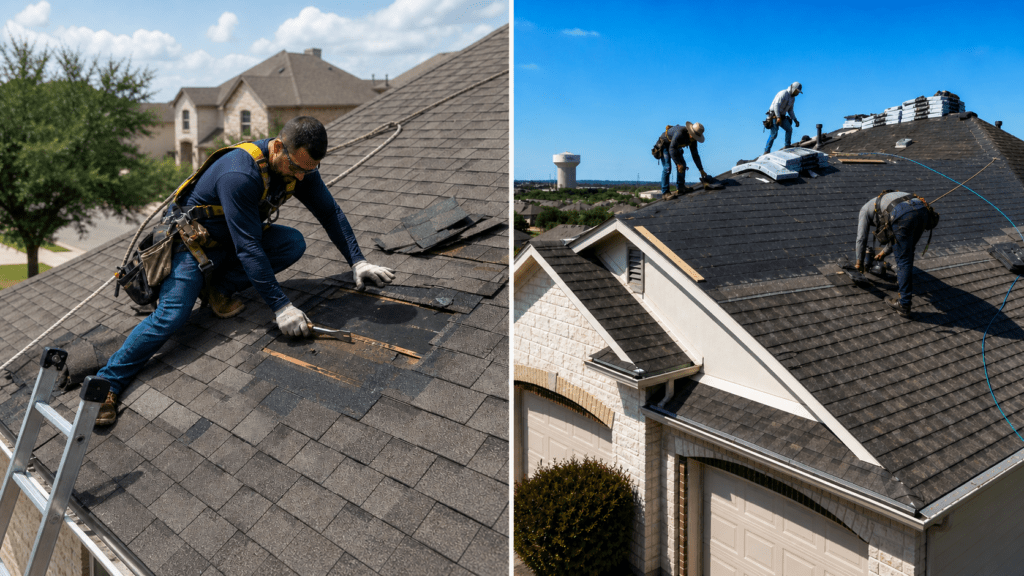
Roof repair and replacement in Leander Texas help homeowners understand when a roof problem can be repaired and when a larger roofing project may be needed. This matters because roofs in Central Texas deal with strong sun, heavy rain, wind, hail, and sudden storm activity that can wear down materials faster than many homeowners expect.
A roof does not always fail all at once. Many roofing problems begin with small signs like a ceiling stain, lifted shingle, loose flashing, or worn seal around a vent. Knowing what to look for helps Leander homeowners respond early, avoid unnecessary damage, and make better decisions about repair, replacement, inspection, and long term roof care.
When Do You Need Roof Repair in Leander TX?
You may need roof repair in Leander TX when small signs of roof damage start to show, especially after heat, wind, hail, heavy rain, or repeated Central Texas storm exposure.
- Water stains or ceiling spots can point to a hidden roof leak that should be checked before moisture spreads.
- Missing or curling shingles can expose the roof to rain, wind, and further shingle damage.
- Damaged flashing around vents, chimneys, skylights, and valleys can let water enter vulnerable areas.
- Small roof issues can get worse over time when heat, rain, and wind keep stressing the same weak spots.
- Minor leaks can affect roof decking, rafters, and other structural materials if moisture stays trapped.
- Moisture buildup can damage insulation, create musty odors, and increase the risk of mold in attic spaces.
- Early inspection helps Leander homeowners decide whether a simple repair is enough or if larger roof work may be needed.
You need roof repair in Leander TX when your roof has damage that affects its ability to shed water, resist wind, or protect the inside of your home. Common examples include missing shingles, curling shingles, cracked shingles, damaged flashing, roof leaks, exposed underlayment, loose vent boots, or storm damage after hail and high winds.
A repair often makes sense when the issue is limited to one area and the rest of the roof still has useful life left. For example, a few wind lifted shingles or a small flashing leak may not require full replacement if the surrounding materials are still performing well. The safest next step is a roof inspection that checks the visible surface, roof penetrations, attic conditions, and signs of hidden moisture.
What Early Signs of Roof Damage Should You Watch For?
The early signs of roof damage include water stains, missing shingles, lifted shingles, curling shingles, granule loss, cracked flashing, loose vent seals, sagging spots, and visible debris damage. These signs can appear after a storm, during normal roof aging, or after long exposure to Central Texas heat.
Leander homeowners should also watch for indoor clues, especially after heavy rain. Ceiling spots, musty odors, bubbling paint, damp insulation, or attic discoloration can suggest that moisture has entered the roofing system. A roof may still look mostly normal from the ground, so small changes are worth taking seriously before the problem spreads.
Do Water Stains or Ceiling Spots Mean There Is a Leak?
Water stains or ceiling spots usually mean moisture is collecting above the ceiling, and a roof leak is one possible cause. The source may be damaged shingles, worn flashing, a cracked vent boot, a leaking skylight, a roof valley issue, or another opening where rainwater can enter.
A ceiling stain does not always sit directly below the leak. Water can travel along rafters, decking, insulation, or drywall before it becomes visible inside the home. For Leander homeowners, a new or growing stain should be checked soon, especially if it appears after a storm or returns during heavy rain.
Are Missing or Curling Shingles a Cause for Concern?
Missing or curling shingles are a concern because they weaken the roof surface and can allow water and wind to get under the roofing materials. Shingles are designed to lie flat and overlap properly, so lifted edges, curled corners, cracked tabs, or missing pieces can reduce the roof’s protection.
In Leander, heat exposure can dry out shingles over time, while wind and hail can loosen or damage them suddenly. A few missing shingles may be repairable if the roof is otherwise healthy. Widespread curling, cracking, bald spots, or repeated shingle loss can point to aging materials or a larger roof performance problem.
Can Damaged Flashing Lead to Bigger Problems?
Damaged flashing can lead to bigger problems because flashing protects the areas where the roof is most likely to leak. Flashing is installed around chimneys, vents, skylights, valleys, walls, and roof transitions to help move water away from seams and openings.
When flashing becomes loose, bent, rusted, cracked, or poorly sealed, water can slip behind the roof covering and reach the decking, attic, or interior walls. This type of leak can be frustrating because it may show up repeatedly even after surface level patching. A proper flashing repair focuses on restoring the water barrier at the source.
Why Can Small Roof Issues Get Worse Over Time?
Small roof issues can get worse over time because rain, wind, heat, and daily temperature changes keep stressing the same weak areas. A small crack, lifted shingle, loose nail, or worn seal may not cause visible damage right away, but repeated exposure can widen the opening and allow more moisture into the roof system.
A small issue can also hide damage beneath the surface. Water may enter slowly and affect decking, insulation, drywall, or attic framing before the homeowner sees a clear warning sign. Early inspection and repair help reduce the chance of a manageable roof problem turning into a larger repair or replacement decision.
How Can a Minor Leak Affect Your Roof Structure?
A minor leak can affect your roof structure by allowing moisture to reach the roof decking, rafters, fasteners, and other support materials. Once these areas stay damp, wood can soften, swell, warp, or develop rot, which weakens the roofing system over time.
The structural concern is often not the first drip you notice. The bigger issue is what may already be happening above the ceiling or inside the attic. If a leak has been active for weeks or months, a roofer may need to check the surrounding decking and attic area to see whether the repair is limited or whether damaged materials need to be replaced.
Can Moisture Lead to Mold or Insulation Damage?
Moisture can lead to mold and insulation damage when water enters the attic, ceiling, or wall space and does not dry properly. Wet insulation can lose performance, hold dampness, and make the home less comfortable during hot Leander weather.
Mold can also develop in dark, enclosed areas when moisture remains trapped. This is why roof leaks should not be judged only by the size of the stain or the amount of dripping water. A small leak can still create enough moisture to affect air quality, insulation performance, and the condition of hidden building materials.
How Serious Can a Roof Leak Become in Leander Homes?
A roof leak in a Leander home can become serious when moisture moves beyond the roof surface and begins affecting hidden areas of the home.
- Hidden damage can develop beneath shingles, underlayment, and roof decking before stains appear indoors.
- Structural components like decking, rafters, and framing can weaken when moisture remains trapped.
- Attic moisture can soak insulation, create musty odors, and reduce indoor comfort.
- Walls and ceilings can show stains, bubbling paint, soft spots, or peeling as water travels downward.
- Water can spread beyond the original leak point through rafters, insulation, drywall, and wall cavities.
- Electrical areas may become a safety concern if water reaches fixtures, wiring, outlets, or attic components.
- Foundation concerns can develop indirectly when roof leaks, gutter overflow, or poor drainage send excess water near the home.
A roof leak in a Leander home can become serious when moisture moves past the roof surface and starts affecting decking, insulation, drywall, attic framing, or interior finishes. A small drip or ceiling stain may look manageable, but water often travels before it becomes visible, which means the actual problem can be farther away or more developed than it appears.
Leander homes face heavy rain, wind, hail, and long periods of heat that can make roof leaks worse over time. Once water finds an opening, repeated storms can push moisture deeper into the roofing system. A leak should be treated as a warning sign, not just an inconvenience,
What Damage Can Happen Behind the Surface?
Damage behind the surface can include wet decking, rotted wood, stained drywall, damp insulation, mold growth, rusted fasteners, and weakened roof components. These problems are often hidden behind shingles, underlayment, attic spaces, ceilings, or walls, so the visible stain inside the home may only show part of the issue.
This is why roof leaks can be frustrating for homeowners. The ceiling may show one small spot, but the moisture may have traveled along rafters, roof valleys, or insulation before showing up indoors. A careful inspection helps identify the entry point, the path of water movement, and whether the damage is limited or spreading.
Can Leaks Affect the Structure of Your Home?
Yes, leaks can affect the structure of your home when water reaches the roof decking, rafters, ceiling joists, or wall framing. Wood materials are strong when kept dry, but repeated moisture exposure can cause soft spots, swelling, warping, rot, and loss of support over time.
A structural problem does not always appear immediately. Many Leander homeowners first notice a stain, a musty smell, or a small drip during heavy rain. The concern is what has been happening above the ceiling or under the shingles before the leak became visible. That is why even a minor leak should be checked before assuming it is only a surface issue.
How Does Moisture Impact Your Attic and Walls?
Moisture can impact your attic and walls by soaking insulation, staining wood, creating musty odors, damaging drywall, and creating conditions where mold can grow. The attic is often one of the first areas affected because roof leaks usually pass through decking and framing before reaching the living space.
Wall damage can happen when water runs down framing or travels behind drywall. This can lead to bubbling paint, soft drywall, discoloration, and hidden dampness inside wall cavities. In Leander homes, attic heat can also make moisture problems harder to ignore because trapped humidity can affect comfort, ventilation, and indoor air quality.
Can a Roof Leak Affect Other Areas of the Home?
A roof leak can affect other areas of the home when water travels beyond the roof system and reaches ceilings, walls, insulation, electrical fixtures, flooring, or the foundation area. Water follows the easiest path available, so the location where it appears inside the home is not always the location where it entered.
A leak that starts at the roof can move through several building materials before a homeowner notices visible damage. That is why one roof leak can create multiple repair concerns, especially if the leak continues through several rain events. Early attention helps reduce the chance of water spreading into areas that are more expensive or complicated to repair.
Can Water Damage Spread Beyond the Roof?
Yes, water damage can spread beyond the roof when moisture travels into the attic, ceiling, walls, flooring, and exterior drainage areas. A roof leak may begin at a damaged shingle, flashing gap, vent boot, skylight, or roof valley, but water can move far beyond that entry point.
Once moisture reaches interior materials, the damage can grow with each storm. Drywall can stain or soften, insulation can lose performance, wood can rot, and paint can bubble. If gutters and drainage are also affected, water may collect near the home and create additional exterior concerns. This is why a roof leak should be evaluated as part of the larger home protection system.
Are Electrical or Foundation Issues Possible?
Yes, electrical or foundation issues are possible when roof leaks are ignored long enough for water to reach wiring, fixtures, walls, or drainage areas around the home. Water near electrical components can create safety hazards, especially around light fixtures, attic wiring, outlets, or breaker connected areas.
Foundation concerns can also develop indirectly when water problems affect drainage around the home. If roof water, gutter overflow, or wall moisture repeatedly reaches the soil near the foundation, the soil can expand, shrink, or shift unevenly. Leander homeowners should treat leaks, poor drainage, and gutter problems seriously because the roof, attic, walls, gutters, and foundation all work together to protect the home.
When Is Roof Replacement the Better Option in Leander?
Roof replacement in Leander becomes the better option when the roof has widespread wear, repeated leaks, aging materials, or repair needs that no longer make financial sense.
- Cracking, cupping, or missing shingles can show that roofing materials are losing strength across the roof.
- Widespread wear can suggest that shingles, flashing, underlayment, and ventilation are no longer working together properly.
- Older roofs in Central Texas may age faster because of heat, hail, wind, heavy rain, and long sun exposure.
- Typical roof lifespan is often around 15 to 25 years for asphalt shingles, depending on materials, installation, ventilation, and weather exposure.
- Repeated repairs can mean the roof is developing new problems instead of dealing with one isolated issue.
- Repair costs can stop being practical when frequent patching does not improve overall roof performance.
- Roof replacement can provide a more dependable long term option when repairs no longer protect the home well.
Roof replacement is the better option in Leander when the roof has widespread damage, repeated leaks, aging materials, structural wear, or repair needs that no longer make financial sense. A repair can solve a limited problem, but replacement may be the better long term decision when the roof system is failing in multiple areas.
For homeowners in Leander, this decision often comes down to safety, cost, and how much useful life the roof still has left. Central Texas heat, hail, wind, and heavy rain can wear down shingles, flashing, underlayment, and decking over time. If a roof keeps needing repairs after every storm, replacement can provide a more dependable way to protect the home.
What Are the Signs Your Roof May Be Reaching the End of Its Life?
A roof may be reaching the end of its life when the materials show widespread wear, repeated leaks, loose shingles, granule loss, soft decking, or visible sagging. These signs suggest that the roof is no longer performing as a complete protective system.
Homeowners should look beyond one damaged spot. A single missing shingle may be a repair issue, but damage across several slopes can mean the roof has aged past the point where small fixes are enough. If the roof looks worn from different angles, has recurring leak problems, or shows damage after mild storms, replacement should be considered.
Are Shingles Cracking, Cupping, or Falling Off?
Cracking, cupping, or falling shingles are signs that roofing materials may be losing strength and flexibility. Shingles are supposed to sit flat, overlap correctly, and create a consistent layer of protection against rain and wind.
In Leander, heat exposure can dry out shingles, while wind and hail can loosen or break them. Cupped shingles can catch wind more easily, and cracked shingles may allow water to reach the underlayment. If only a small area is affected, repair may be enough. If cracking, cupping, and missing shingles appear across the roof, replacement is often the more practical option.
Do You Notice Widespread Wear Across the Roof?
Widespread wear across the roof usually means the roofing system is aging as a whole rather than having one isolated problem. This can show up as bald shingles, dark streaks, uneven color, granule buildup in gutters, lifted edges, worn valleys, and repeated damage on multiple roof slopes.
A roof with widespread wear may still look acceptable from the street, but that does not always mean it is protecting the home well. The concern is whether shingles, underlayment, flashing, and ventilation are still working together properly. If several areas show wear at the same time, a roof inspection can help determine whether replacement will provide better value than continued repairs.
How Do Age and Repeated Repairs Factor Into the Decision?
Roof age and repeated repairs matter because older roofing materials are more likely to keep failing even after individual problem areas are fixed. A repair may stop one leak, but it cannot reset the age of the shingles, underlayment, flashing, or roof deck.
If a homeowner has already paid for several repairs within a short period, it may be time to compare the cost of continued patching with the value of a full roof replacement. The decision should consider roof age, repair history, storm exposure, material type, and the overall condition of the home’s roofing system.
How Long Do Most Roofs Last in Central Texas?
Most asphalt shingle roofs in Central Texas last around 15 to 25 years, depending on the material quality, installation, ventilation, storm exposure, and maintenance history. Some roofs may last longer with better materials and proper care, while others may wear out sooner because of heat, hail, wind, and poor attic airflow.
Leander homeowners should not rely on age alone when deciding what to do. A 12 year old roof with storm damage may need more attention than a 20 year old roof that has been well maintained. The best approach is to compare the roof’s age with its current condition, visible wear, leak history, and how well it has handled recent weather.
When Do Repairs Stop Being Cost Effective?
Repairs stop being cost effective when the roof keeps developing new problems, the damage covers several areas, or the cost of repeated repairs starts approaching the value of replacement. A small repair is reasonable when it solves a specific issue, but frequent patching can become a short term expense without fixing the larger problem.
A roof replacement may make more sense when shingles are failing across multiple slopes, leaks keep returning, decking is damaged, or the roof is already near the end of its expected lifespan. For a homeowner, the goal is not just to spend less today. The goal is to choose the option that protects the home, reduces stress, and makes sense over the next several years
How Do You Decide Between Roof Repair and Replacement in Leander?
| Choose Roof Repair If | Choose Roof Replacement If |
|---|---|
| Damage is limited to one section of the roof | Problems are showing up across multiple roof areas |
| The roof still has useful life left | The roof is aging and nearing the end of its expected lifespan |
| Shingles, flashing, and decking are mostly in good condition | Widespread shingle wear, granule loss, or curling is visible |
| The issue appears to be isolated storm damage or a small leak | Leaks or shingle problems keep returning after previous repairs |
| A targeted repair can restore proper protection | Repairs no longer address the larger roof performance problem |
| Repair costs are reasonable and can extend roof life | Ongoing repair costs are adding up without improving reliability |
| No soft decking, sagging, rot, or structural wear is found | The roof shows soft spots, sagging, damaged decking, or structural wear |
| The roof can still handle Leander heat, rain, wind, and storm exposure | The roof is no longer dependable during Central Texas weather |
You decide between roof repair and replacement in Leander by looking at the size of the damage, the age of the roof, the condition of the materials, and whether the problem is isolated or widespread. A repair may be enough when the issue is small and the rest of the roof is still in good condition. Replacement becomes more practical when damage is showing up across multiple areas or the roof is already near the end of its expected life.
For homeowners, the decision should not be based on guesswork or fear. A good roof inspection should look at shingles, flashing, roof penetrations, underlayment, decking, attic ventilation, and signs of interior moisture. Once the full condition is clear, it becomes easier to compare repair cost, remaining roof life, storm damage concerns, and long term protection.
When Does a Repair Make Sense?
A roof repair makes sense when the damage is limited, the roof is still structurally sound, and the existing materials have enough useful life left to justify the repair. This often applies to problems like a small leak, a few missing shingles, loose flashing, minor storm damage, or a damaged vent boot.
A repair is usually the more reasonable choice when fixing one area can restore the roof’s ability to keep water out. For example, if a newer roof has a small wind damaged section, replacing those shingles may solve the issue without needing a full replacement. The key is making sure the repair addresses the source of the problem, not just the visible symptom.
Is the Damage Limited to One Area?
Damage limited to one area is often a good candidate for roof repair. A small section of missing shingles, a leak around one pipe boot, or flashing damage near one chimney may be repaired without replacing the whole roof.
The important question is whether the surrounding roof materials are still in good shape. If the nearby shingles are flexible, properly sealed, and not showing widespread wear, a targeted repair may be enough. If the damaged area is only one visible part of a larger pattern, a deeper inspection may reveal that replacement is the better option.
Does the Roof Still Have Useful Life Left?
A roof still has useful life left when the shingles, flashing, underlayment, decking, and ventilation are still performing well outside the damaged area. Age matters, but condition matters more because some roofs wear faster in Central Texas due to heat, hail, wind, and poor airflow.
If the roof is fairly young and the damage is minor, repair can protect the home without unnecessary replacement. If the roof is older but still has consistent shingle coverage, no major sagging, limited granule loss, and no repeated leaks, a repair may still be reasonable. A roof that keeps failing in different spots is usually a different story.
When Is Replacement the Smarter Long Term Choice?
Replacement is the smarter long term choice when the roof has widespread wear, recurring leaks, storm damage across multiple slopes, damaged decking, or materials that are too aged to repair reliably. In these cases, repeated repairs may only delay a roof replacement that is already needed.
A full replacement can solve problems that repairs cannot fully correct, especially when the roofing system is failing as a whole. It also gives homeowners a chance to improve underlayment, ventilation, flashing, drainage, and material performance. For many Leander homeowners, replacement makes more sense when the goal is fewer repairs, better protection, and a more dependable roof for the years ahead.
Are Problems Showing Up in Multiple Areas?
Problems showing up in multiple areas usually point to a roof system that may be wearing down as a whole. Leaks in different rooms, shingles missing on several slopes, widespread granule loss, and repeated flashing issues are signs that a single repair may not solve everything.
Multiple problem areas can also make repairs less predictable. One patch may stop one leak, but another weak spot may show up during the next storm. When damage is spread across the roof, replacement may offer a cleaner and more reliable solution than chasing one repair after another.
Is the Roof Showing Signs of Structural Wear?
A roof showing signs of structural wear may need replacement rather than repair. Warning signs can include sagging areas, soft decking, warped roof lines, rotted wood, repeated leaks, or attic framing that shows moisture damage.
Structural wear matters because shingles alone cannot fix a weakened roof base. If the roof deck or framing has been affected, the damaged materials may need to be removed and replaced before a new roofing system can perform properly. For homeowners in Leander, this is where a thorough inspection becomes especially important because surface repairs can hide deeper problems if the structure is not checked.
How Does Leander Weather Affect Your Roof?
| Weather Element in Leander | How It Affects Your Roof |
|---|---|
| High Heat and Strong Sun | Central Texas heat and UV exposure can dry out shingles, fade surfaces, loosen granules, and speed up cracking or curling over time. |
| Summer Temperatures | Nearby Austin climate data shows normal highs above 90 degrees from late May through late September, which adds ongoing heat stress to shingles, seals, and attic spaces. |
| Heavy Rainfall | The greater Austin area averages about 35.5 to 36.25 inches of rain per year, so valleys, flashing, gutters, and roof edges must shed water properly during storms. |
| Thunderstorms | Fast moving storms can expose weak points around vents, skylights, chimneys, valleys, and seams where water can enter the roofing system. |
| Hail | Hail can bruise shingles, knock away protective granules, dent vents, and shorten the life of roofing materials even when damage is hard to see from the ground. |
| Strong Winds | Wind can lift shingles, break seals, loosen fasteners, and push rain into small openings that may not leak during lighter rain. |
| Tropical Storm Moisture | Leander is not a coastal city, but tropical systems can still bring soaking rain into Central Texas after landfall along the Texas coast. |
| Poor Attic Ventilation | Poor airflow traps heat and moisture in the attic, which can increase shingle wear, damp insulation, and contribute to mold or wood deterioration. |
Leander weather affects your roof by exposing it to long periods of heat, strong sun, heavy rain, hail, wind, and occasional tropical storm moisture. Since Leander sits in the Central Texas and greater Austin weather region, nearby Austin climate data is a useful reference point. The National Weather Service describes the Austin area as having long, hot summers, short mild winters, and about 35.5 to 36.25 inches of average yearly rainfall, with May, October, and June among the wettest months.
This matters because roofing materials are constantly expanding, contracting, drying, and shedding water throughout the year. Normal highs in the Austin area reach 90 degrees by late May and stay above 90 until late September, with peak summer highs in the upper 90s and occasional heat index values above 110 degrees. That kind of heat can speed up shingle aging, dry out seals, stress flashing, and make attic ventilation more important for homeowners in Leander.
Rain is another major factor. The National Weather Service notes that spring and summer precipitation in the Austin area often comes from thunderstorms, and those storms can drop large amounts of rain in a short time. Rainfall has exceeded 5 inches in several hours in the region, and Austin sits in an area known as Flash Flood Alley. For a roof, that means valleys, flashing, gutters, underlayment, vent boots, and roof edges need to shed water correctly during fast moving storms.
Hail and wind are also common roof concerns in Central Texas. The National Weather Service says the main severe weather season for the Austin area runs primarily from March through May, and most severe weather comes in the form of large hail and strong winds. Hail can bruise shingles and knock away protective granules, while wind can lift shingles, loosen fasteners, and push rain into small gaps that may not leak during lighter rain.
Hurricanes are not a direct everyday threat for Leander, but tropical systems can still affect the area through heavy rainfall after landfall along the Texas coast. The National Weather Service states that tropical storms affect the Austin region on rare occasions, with the main threat being heavy rain and flooding. During Hurricane and Tropical Storm Harvey in 2017, Austin Camp Mabry received 7.94 inches of rain and Austin Bergstrom received 10.07 inches. For Leander homeowners, that shows why a roof should be ready not only for hail and heat, but also for long, soaking rain events.
What Impact Does Heat Have on Roofing Materials?
Heat affects roofing materials by causing expansion, contraction, drying, and gradual surface wear. Asphalt shingles can lose flexibility as they age, and repeated exposure to strong sunlight can make the material more brittle over time.
Central Texas heat can also increase attic temperatures when ventilation is poor. This can stress the underside of the roof deck and speed up wear on shingles from below. Homeowners may notice granule loss, curling edges, cracking, or shingles that look dry and worn before the roof reaches the age they expected.
Can High Temperatures Cause Shingles to Wear Faster?
Yes, high temperatures can cause shingles to wear faster because heat and UV exposure can dry out asphalt materials and weaken the protective granule surface. Once shingles lose granules or become brittle, they are more vulnerable to cracking, wind lift, and water intrusion.
This is why Leander homeowners should pay attention to roof condition after long hot seasons, not only after major storms. Signs like curling shingles, bald spots, loose granules in gutters, and faded or brittle shingle surfaces can suggest weather related aging. A roof inspection can help determine whether the issue is normal wear, isolated damage, or a sign that the roof is approaching replacement age.
How Do Storms and Wind Affect Roof Performance?
Storms and wind affect roof performance by lifting shingles, loosening fasteners, damaging flashing, denting vents, and pushing rain into weak points. Wind driven rain can enter areas that do not normally leak during light rain, especially around roof edges, valleys, penetrations, and older seal points.
Leander storms can also leave damage that is not easy to see from the ground. A roof may have lifted shingles, bruised areas, loosened flashing, or missing granules even if there is no active leak yet. After heavy wind, hail, or repeated storms, a roof check can help confirm whether the roofing system is still sealed and secure.
Can Hail and Wind Cause Hidden Damage?
Yes, hail and wind can cause hidden damage that may not leak immediately. Hail can bruise shingles, knock away granules, dent metal components, and weaken the protective surface of the roof. Wind can lift shingles just enough to break the seal or loosen fasteners without fully removing the shingle.
Hidden storm damage matters because it can shorten the life of the roof and make leaks more likely during future rain. A homeowner may not notice the problem until stains appear inside, but the roof may have been compromised earlier. For that reason, checking the roof after hail or strong wind is a smart way to catch issues before they spread.
Why Does Ventilation Matter for Roof Health?
Ventilation matters for roof health because proper airflow helps control heat and moisture in the attic. A balanced system allows fresh air to enter through intake vents and warm, moist air to exit through exhaust vents, which helps protect the roof deck, insulation, and shingles.
Poor ventilation can make a roof age faster from the inside. Heat trapped in the attic can raise roof deck temperatures, and moisture buildup can lead to damp insulation, mold concerns, and wood deterioration. Good ventilation supports the full roofing system, not just indoor comfort.
Can Poor Airflow Increase Heat and Moisture Problems?
Yes, poor airflow can increase heat and moisture problems because trapped attic air has nowhere to escape. When heat builds up, shingles may wear faster, and when moisture collects, wood decking, insulation, and attic framing can be affected.
For homeowners in Leander, poor airflow can be easy to miss because the warning signs often appear slowly. Common clues include hot rooms, musty attic odors, damp insulation, condensation, and recurring roof wear that seems worse than expected. A roof inspection should include ventilation checks so heat and moisture problems are addressed along with any visible roofing damage.
What Should a Roof Inspection Include in Leander?
A proper roof inspection in Leander should check both the exterior roofing system and the interior areas where hidden leaks, moisture, and ventilation problems can appear.
- Shingle condition checked for cracking, curling, missing pieces, lifted edges, hail marks, and granule loss
- Flashing areas inspected around chimneys, skylights, vents, valleys, walls, and roof transitions for gaps or wear
- Roof vents and pipe boots reviewed for cracked seals, loose fasteners, damaged caps, and proper watertight protection
- Valleys and roof edges evaluated because these areas handle heavy water flow during Central Texas storms
- Gutters and drainage checked for granule buildup, clogs, sagging sections, and water flow problems near the home
- Roof decking assessed where visible or accessible for soft spots, sagging, rot, or signs of structural weakness
- Attic inspection performed when access is safe to look for moisture, stains, leaks, mold concerns, and insulation damage
- Ventilation system reviewed to identify heat buildup, poor airflow, blocked vents, or moisture problems in attic spaces
- Interior signs such as ceiling stains, bubbling paint, wall discoloration, musty odors, or soft drywall examined
- Leak source identification used to trace where water may be entering instead of only treating the visible stain
- Overall roof condition evaluated to determine whether the issue is isolated, widespread, storm related, or age related
- Clear recommendations provided to help homeowners decide between repair, replacement, maintenance, or monitoring
A roof inspection in Leander should include a close review of the roof surface, roof penetrations, flashing, ventilation, drainage, attic conditions, and any visible signs of water intrusion. The goal is to find both obvious damage and hidden issues that could lead to leaks, repair needs, or replacement concerns.
For homeowners, a good inspection should not feel like a quick glance from the driveway. Leander roofs deal with heat, hail, wind, and heavy rain, so the inspection needs to look at how the whole roofing system is performing. That includes the materials on top of the roof, the areas where water commonly enters, and the attic spaces where early moisture problems often show up.
What Parts of the Roof Are Checked?
A roof inspection should check the shingles, flashing, roof vents, pipe boots, valleys, ridges, gutters, skylights, chimney areas, roof edges, and visible decking concerns. These parts work together to move water off the roof and away from the home.
The inspection should also look for storm related issues such as lifted shingles, hail marks, missing granules, loose flashing, cracked sealant, punctures, and debris damage. In Leander, these details matter because one weak point can allow rain to enter during the next storm, even if the rest of the roof looks fine.
Are Shingles, Flashing, and Vents Inspected?
Yes, shingles, flashing, and vents should always be inspected because they are some of the most common areas where roof problems begin. Shingles are checked for cracking, curling, missing pieces, granule loss, lifted edges, and signs of hail or wind damage.
Flashing should be checked around chimneys, skylights, vents, walls, valleys, and roof transitions to make sure water is being directed away from openings. Vents and pipe boots should also be reviewed for cracked rubber seals, loose fasteners, damaged caps, or gaps that could let water enter. These small details often explain leaks that homeowners cannot trace on their own.
What Interior Areas Are Evaluated?
Interior areas evaluated during a roof inspection can include ceilings, walls, attic spaces, insulation, roof decking, rafters, and areas around vents or light fixtures. These areas can show whether moisture has already moved past the roof surface.
Homeowners should pay attention to stains, bubbling paint, soft drywall, musty smells, damp insulation, and dark marks on attic wood. These signs can help connect an exterior roof issue to what is happening inside the home. A roof may look acceptable from the outside, but interior clues can reveal hidden water intrusion.
Is the Attic Checked for Moisture and Ventilation Issues?
Yes, the attic should be checked for moisture and ventilation issues whenever access is safe and available. The attic can show signs of roof leaks, condensation, mold concerns, wet insulation, poor airflow, and heat buildup before those problems become obvious inside the living space.
A proper attic check looks at the underside of the roof deck, rafters, insulation, vent openings, and signs of trapped humidity. In Leander, this matters because hot attic temperatures and poor ventilation can age shingles faster and increase moisture problems. Checking the attic gives a more complete view of roof health than an exterior inspection alone.
How Does an Inspection Help You Make the Right Decision?
A roof inspection helps you make the right decision by showing whether the roof needs repair, replacement, maintenance, or simple monitoring. Instead of guessing based on one stain, one missing shingle, or one storm, an inspection gives a clearer picture of the roof’s overall condition.
This is especially helpful when homeowners are unsure whether damage is minor or widespread. A thorough inspection can identify the source of a leak, document storm damage, check the roof’s remaining useful life, and explain which option makes the most sense. The best outcome is a clear plan that helps protect the home without paying for work that is not needed.
Will You Get Clear Repair or Replacement Recommendations?
Yes, a proper roof inspection should give you clear repair or replacement recommendations based on the actual condition of the roof. The recommendation should explain what was found, where the problem is located, how serious the damage appears to be, and whether the issue can be repaired or points to a larger roofing concern.
For Leander homeowners, this clarity matters because roof problems can be stressful and expensive if the next step is unclear. A good recommendation should separate immediate concerns from future maintenance needs, explain whether damage is isolated or widespread, and help you understand the practical difference between repairing the roof now and planning for replacement.
What Repairs Help Prevent Future Leaks in Leander?
Roof repairs in Leander help prevent future leaks when they fix the real entry point, restore proper water flow, and reinforce weak areas before the next storm.
- Proper shingle replacement restores the roof’s ability to shed rain and protect the underlayment beneath the surface
- Flashing repairs help stop recurring leaks around chimneys, skylights, vents, valleys, and roof transitions
- Correct installation methods make sure shingles, underlayment, flashing, fasteners, and sealants work together as a system
- Vent boot and seal repairs close common leak points around plumbing penetrations and roof vents
- Valley repairs protect areas that carry heavy water flow during Central Texas rainstorms
- Root cause repairs reduce repeat leaks by fixing where water enters instead of only covering the visible stain
- Quality materials improve resistance to Leander heat, hail, wind, heavy rain, and daily roof movement
- Durable underlayment and sealants add backup protection beneath shingles and around vulnerable roof details
- Well-executed repairs can reduce ongoing maintenance needs and help extend the useful life of the roof
Repairs that prevent future leaks in Leander are the repairs that fix the actual entry point, restore the roof’s water barrier, and address nearby weak spots before the next storm. This can include shingle replacement, flashing repair, vent boot replacement, sealant renewal, valley repair, underlayment repair, and correcting drainage problems around gutters or roof edges.
A leak repair should not only cover the visible symptom. For example, a ceiling stain may come from a lifted shingle, a cracked pipe boot, loose flashing, or worn sealant several feet away. The best repair approach starts with finding where water is entering, checking the surrounding materials, and making sure the repaired area can handle heavy rain, wind, and heat common in Leander and Central Texas.
What Techniques Help Fix Problems the Right Way?
The techniques that help fix roof problems the right way include removing damaged materials, checking the surface underneath, replacing compromised components, and sealing vulnerable areas with materials suited for the roof system. A proper repair should restore how the roof sheds water rather than simply adding a quick patch over the top.
Good repair work also looks at how the problem started. If shingles blew off because of poor fastening, the repair should correct the attachment. If flashing failed because of age or poor sealing, the repair should address the flashing system and not just apply more caulk. This kind of careful work helps reduce the chance of the same leak coming back during the next Leander storm.
Does Proper Shingle Replacement Make a Difference?
Yes, proper shingle replacement makes a difference because shingles must be installed, aligned, fastened, and sealed correctly to protect the roof from water and wind. Replacing a missing or damaged shingle is not just about filling an empty space. The new shingle needs to blend into the existing roof system and restore the overlap that moves rain off the roof.
A poor shingle repair can lift during high winds, create gaps, or allow water to slip underneath the surrounding shingles. A proper repair should include checking the underlayment, removing broken pieces, using compatible materials, and fastening the shingle in the right location. This helps homeowners avoid recurring leaks and protects the roof deck from unnecessary moisture exposure.
Can Flashing Repairs Stop Recurring Leaks?
Yes, flashing repairs can stop recurring leaks when the leak is coming from a roof transition, penetration, valley, chimney, wall connection, vent, or skylight area. Flashing is designed to move water away from openings, so damaged or loose flashing can let water enter even when the shingles around it look fine.
Recurring leaks often happen because the visible area is patched while the flashing problem remains. A better repair may involve removing old sealant, resetting or replacing flashing, securing loose edges, and making sure the surrounding materials overlap correctly. This is especially important in Leander because wind driven rain can push water into small gaps that may not leak during lighter rain.
Why Do Materials and Installation Methods Matter?
Materials and installation methods matter because even a good roofing product can fail early if it is installed incorrectly or used in the wrong application. A roof is a system made of shingles, underlayment, flashing, vents, fasteners, sealants, decking, and drainage components that all need to work together.
For homeowners, this means the lowest cost repair is not always the best value. Materials should be compatible with the existing roof, and installation should follow the right sequence so water flows over each layer instead of behind it. Careful installation helps the repair hold up better against heat, storms, and normal roof movement over time.
Can Better Materials Reduce the Risk of Future Issues?
Yes, better materials can reduce the risk of future issues when they are matched to the roof, installed correctly, and suited for Central Texas weather. Stronger shingles, quality underlayment, durable flashing, better vent boots, and proper sealants can help the repaired area resist heat, rain, wind, and storm wear.
Better materials are not only about appearance. They can improve water resistance, wind performance, impact resistance, and long term durability. For a Leander homeowner, that can mean fewer repeat repairs, less worry after storms, and a roof system that is better prepared for local conditions.
Do Roofing Projects Require Permits in Leander?
Roofing permits in Leander may be required depending on the scope of the project, especially when the work involves full replacement, reroofing, decking, or structural repairs.
- Permits are often required for full roof replacements, reroofing, and major roofing projects within city limits
- Structural repairs involving decking, rafters, framing, or load-bearing roof components may need approval
- Minor roof repairs may not always require a permit, but the scope should still be confirmed before work begins
- Local requirements help make sure roofing work follows safety, construction, and code standards in Leander
- Permit records provide a clear history of approved roofing work completed on the property
- Inspection reports and photos can document the roof condition before, during, and after the project
- Roofing documentation can help homeowners share accurate repair or replacement details with an insurance carrier
- Detailed records can support future resale by showing buyers when the roof work was completed and what was done
Roofing projects may require permits in Leander when the work is considered construction within city limits, especially for roof replacement, reroofing, structural repairs, or major work that affects the roof system. The City of Leander states that a permit is required before starting construction located on property within the city limits, so homeowners should confirm requirements before work begins.
Permit needs can depend on the scope of work, the property location, and whether the project involves simple repair or more extensive roof work. Replacing a few damaged shingles may be treated differently than removing and replacing a full roofing system. When in doubt, the safest approach is to check with the City of Leander or ask a qualified roofing professional to explain which steps may apply to the project.
When Are Permits Typically Needed?
Permits are typically needed when a roofing project involves full roof replacement, reroofing, structural repairs, material changes, or work that affects the roof deck, framing, or major roof components. Texas roofing permit rules are generally handled at the city or local level, and Leander requires permits before construction within city limits.
A smaller repair may not always require a permit, but homeowners should avoid assuming. Roof work tied to storm damage, decking replacement, roof slope changes, solar preparation, or other major updates may need more documentation than a basic patch. Confirming permit requirements early helps prevent delays and keeps the project aligned with local expectations.
Do Structural Repairs Require Approval?
Yes, structural roof repairs often require approval because they can affect the safety, support, and code compliance of the home. Structural work may include repairing or replacing damaged decking, rafters, trusses, beams, or other load bearing parts of the roof system.
This matters because structural repairs are different from surface level shingle replacement. A roof may need more careful review if water damage, rot, sagging, storm impact, or long term leaks have affected the materials beneath the shingles. Getting the right approval helps make sure the repair is handled properly and that the finished work supports the home safely.
Why Is Documentation Important?
Documentation is important because it creates a clear record of the roof’s condition, the work performed, the materials used, and any permit or inspection details tied to the project. Good documentation can include photos, written estimates, roof inspection notes, product details, signed agreements, permit records, and final walkthrough information.
For homeowners, documentation helps reduce confusion. It gives you something to reference if questions come up later about repairs, warranty coverage, storm damage, or future maintenance. It also helps separate minor maintenance from larger roofing work that may affect the home’s value, safety, or resale history.
Can It Help With Insurance or Future Resale?
Yes, roofing documentation can help with insurance questions and future resale because it shows what happened, when the work was completed, and whether the project followed local requirements. Permit records, inspection notes, photos, and invoices can help a homeowner explain the roof’s history more clearly.
For resale, buyers often want to know the roof’s age, material type, repair history, and whether major work was completed properly. Clear records can make those conversations easier and may help support confidence during inspection or closing. For insurance related situations, documentation of observed roof damage and repair estimates can help the homeowner understand the condition of the roof and share accurate information with their carrier.
What Should You Do If You Notice Roof Damage in Leander?
If you notice roof damage in Leander, taking the right steps early can help limit water intrusion, protect your home, and give you a clearer path toward repair or replacement.
- Check for visible signs safely such as ceiling stains, missing shingles, loose granules, damaged vents, or fallen debris without climbing onto the roof
- Protect the affected area by moving belongings away from leaks and placing a bucket or container under active dripping when it is safe to do so
- Schedule a professional inspection to evaluate the full extent of the damage after hail, wind, heavy rain, or visible roof wear
- Document the damage with photos, videos, dates, and notes of affected areas inside and outside the home
- Identify the source of the issue through a proper roof evaluation instead of assuming the visible stain is directly below the leak
- Review repair and replacement options based on the roof’s age, material condition, leak history, and whether damage is isolated or widespread
- Get a clear written plan that explains the recommended work, the affected areas, and the expected result
- Move forward with the right solution to restore roof protection and reduce the chance of further damage during the next Central Texas storm
If you notice roof damage in Leander, you should protect the area if it is safe, avoid climbing on the roof, document what you can see, and schedule a professional inspection as soon as possible. Roof damage can be hard to judge from the ground, especially after hail, wind, or heavy rain, so it is better to confirm the condition before assuming the problem is minor.
Homeowners should take roof damage seriously even when the signs look small. A missing shingle, ceiling stain, dented vent, or lifted flashing can allow water into the home during the next storm. The goal is to prevent more damage, understand the source of the problem, and decide whether the roof needs repair, maintenance, or replacement.
What Are the First Steps You Should Take?
The first steps are to stay safe, look for visible signs of damage, check the inside of the home for leaks, and avoid walking on the roof. If water is actively entering the home, place a bucket under the drip, move belongings away from the area, and take photos of the visible damage.
You can also check the yard, gutters, downspouts, attic access area, ceilings, and walls for clues. Look for shingle pieces on the ground, loose granules in gutters, water stains, bubbling paint, damp insulation, or musty odors. These details help a roofing professional understand what happened and where the inspection should focus.
Should You Schedule an Inspection Right Away?
Yes, you should schedule an inspection right away if you notice roof damage, especially after hail, strong wind, or heavy rain. A prompt inspection helps identify whether the damage is limited to the surface or has started affecting the underlayment, decking, flashing, attic, or interior areas.
Waiting can make the problem harder to repair. Water can spread behind ceilings and walls before it becomes visible, and small openings can get worse with each storm. An inspection gives you a clear answer about the roof’s condition so you are not guessing or relying only on what you can see from the ground.
Is It Helpful to Document the Damage?
Yes, documenting roof damage is helpful because photos, videos, dates, and notes create a clear record of what you noticed and when it happened. This can include ceiling stains, missing shingles, fallen branches, hail marks, gutter damage, damaged vents, and any water that entered the home.
Documentation also helps when you speak with a roofing professional or your insurance carrier. The goal is not to diagnose the roof yourself, but to preserve useful information before conditions change. Clear photos and written notes can make the inspection conversation easier and help support an accurate repair or replacement estimate.
How Can You Get a Clear Plan Moving Forward?
You can get a clear plan by having the roof inspected, reviewing the findings, and asking for a written explanation of the recommended next steps. A good plan should explain what is damaged, whether the issue is isolated or widespread, what repair or replacement options are available, and what should be handled first.
For Leander homeowners, this is especially helpful after storm damage because roof problems can feel urgent and confusing. A clear plan should separate immediate concerns from future maintenance needs. It should also help you understand whether the roof can be repaired now or whether replacement may be the better long term choice.
Can a Professional Help You Compare Your Options?
Yes, a professional can help you compare your options by explaining the difference between repair, replacement, maintenance, and monitoring based on the roof’s actual condition. This helps you avoid spending money on work that does not match the problem.
A professional should look at the roof’s age, material type, storm exposure, leak history, visible damage, attic conditions, and overall performance. From there, you should receive a practical recommendation that explains the pros and cons of each option. That kind of guidance helps homeowners make a confident decision without feeling rushed.
How Can You Get Help With Your Roof in Leander?
Leander homeowners can get help with roof repair or replacement by working with Legacy Roofing Pros for clear communication, honest recommendations, and a simple process from inspection to estimate.
Whether you are dealing with a roof leak, storm damage, missing shingles, or an older roof that may need replacement, the team can inspect your roof, explain what was found, and help you understand the next step with confidence.
You can get help with your roof in Leander by scheduling a professional roof inspection and getting a clear explanation of your repair or replacement options. If you are dealing with a leak, missing shingles, storm damage, aging materials, or uncertainty after hail and wind, the right first step is to have the roof checked before the problem spreads.
Legacy Roofing Pros helps Leander homeowners understand what is happening with their roof without pressure or confusion. The team can inspect the roof, document visible damage, explain repair and replacement options, and provide a free estimate so you know what makes sense for your home. The goal is to give you a clear plan based on the actual condition of the roof.
Why Do Homeowners Choose Legacy Roofing Pros?
Homeowners choose Legacy Roofing Pros because they want honest guidance, clear communication, careful workmanship, and a roofing team that understands Central Texas weather. Roof problems can feel stressful, especially after a storm, so it helps to work with a contractor that explains the findings in plain language and helps homeowners make informed decisions.
Legacy Roofing Pros is a Texas roofing company that works with residential and commercial roofs, including roof repair, roof replacement, storm damage services, roof inspections, estimates, and related exterior work. The company also focuses on protecting the property during roofing projects, keeping homeowners updated, and providing support through each step of the roofing process.
Do You Get Clear Communication and Honest Recommendations?
Yes, you get clear communication and honest recommendations when working with Legacy Roofing Pros. The team explains what was found during the inspection, what areas need attention, and whether repair, replacement, maintenance, or monitoring makes the most sense.
This matters because homeowners should never feel pushed into a roofing decision they do not understand. If damage is found, Legacy Roofing Pros can document the observed condition, provide an estimate, and explain roofing related options so you can decide what is best for your home. No work should begin until you understand the estimate and approve the plan.
How Can You Schedule a Roof Inspection?
You can schedule a roof inspection by contacting Legacy Roofing Pros and requesting a roof check for your Leander property. A roof inspection is especially helpful after hail, high winds, heavy rain, ceiling stains, missing shingles, or any concern that the roof may no longer be protecting the home properly.
During the scheduling process, it helps to share what you have noticed, when the issue started, and whether the home recently experienced storm activity. This gives the roofing team a better starting point when checking shingles, flashing, vents, valleys, gutters, attic areas, and interior signs of moisture. A scheduled inspection gives you a clear next step instead of guessing from the ground.
Can You Get a Free Estimate and Expert Guidance?
Yes, you can get a free estimate and expert guidance from Legacy Roofing Pros after your roof has been inspected. The estimate should explain the recommended work, the areas involved, and whether the issue appears to be a repair need or a larger replacement concern.
For Leander homeowners, this guidance can make the roofing process feel much easier to manage. You can ask questions, compare options, and understand what needs attention now versus what can be monitored over time. If storm damage is present, Legacy Roofing Pros can provide documentation and roofing related information that helps you understand the condition of your roof and the next steps available to you.
Your home should stay protected and respected throughout any roofing project, not just after the work is complete. Many Leander homeowners worry about roof leaks, storm damage, property protection, and whether repair or replacement is the right choice. The right roofing team and process can make the experience clearer, cleaner, and less stressful from start to finish.
If you are dealing with missing shingles, hail damage, water stains, aging roof materials, or uncertainty about your roof’s condition, help is available. Legacy Roofing Pros provides free inspections, straightforward estimates, and clear updates so you always understand what is happening. Homeowners in Leander and surrounding Central Texas communities can expect a process focused on accurate roof assessments, honest recommendations, and long term protection for their home.
CONTACT US TODAY!
Fill out the form below to schedule your free roof inspection with Legacy Roofing Pros and get a clear, honest assessment of your roof.