Monday to Friday
Drop your queries
Round Rock, TX 78681,
United States
Head Office
Find practical ways to pay for roof repair or replacement without cash, including insurance, financing, personal loans, grants, and assistance.
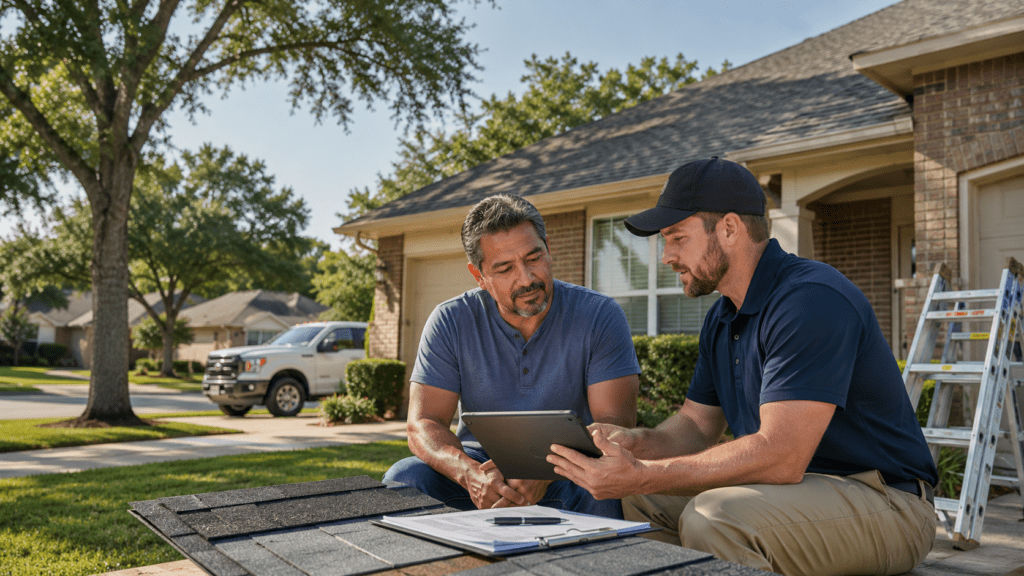
You can pay for a roof if you do not have cash by exploring roof financing options, homeowners insurance, contractor financing, personal loans, credit cards, home equity loans, HELOCs, government assistance, nonprofit programs, or a payment plan that fits your budget. The right option depends on why your roof needs work, how urgent the problem is, whether storm damage caused the issue, your credit score, your available home equity, your income level, and how much you can safely repay over time.
For many Texas homeowners, roof problems do not happen at a convenient time. Hail, wind, heavy rain, extreme heat, aging shingles, and sudden roof leaks can create stress when the roof replacement cost is more than expected. If you are trying to afford a new roof or pay for a roof with no money upfront, the first step is to find out what your roof actually needs before choosing a payment option.
A professional roof inspection and written estimate can help you understand whether your roof needs a small repair, a larger repair, full replacement, or storm damage documentation. Once you know the condition of your roof and the estimated cost, you can compare roof replacement financing, insurance coverage, loan options, assistance programs, and payment terms with more confidence.
If you cannot afford a new roof, start by confirming what your roof actually needs before choosing a payment option. A roof inspection and written roof estimate can show whether you need a minor repair, emergency roof repair, a larger repair, or a full roof replacement.
Before choosing roof financing, insurance, or another payment option, confirm what your roof needs and review the full cost clearly.
A professional roof inspection can identify visible and hidden roof damage, including missing shingles, leaks, flashing problems, granule loss, soft decking, and storm damage. This step helps you avoid guessing about the condition of your roof.
Storm damage may involve hail impact, wind lifted shingles, fallen debris, or sudden leaks after heavy rain. Age related damage usually comes from normal wear, old shingles, poor ventilation, or long term exposure to Texas heat. This matters because storm related damage may lead to an insurance claim, while age related damage usually requires another payment option.
A written roof estimate gives you a clearer view of the expected cost, scope of work, materials, and repair options. This can help you compare roof repair options, roof financing, and possible payment plans with more confidence.
If the roof damage was caused by hail, wind, fire, or another covered event, your homeowners insurance may help pay for roof repair or replacement. Review your policy, deductible, and claim requirements before assuming what is or is not covered.
Once you know the estimated cost, compare contractor financing, personal loans, credit cards, home equity options, government assistance, nonprofit programs, or savings based payment planning. Look at the full cost, not just the monthly payment.
Before agreeing to any roof financing or payment plan, review the interest rate, fees, repayment length, promotional period, prepayment rules, and total cost. A lower monthly payment may look easier at first, but the full repayment amount can be much higher if the loan stretches over several years.
For Texas homeowners dealing with hail, wind, heavy rain, or active roof leaks, the first priority is stopping further damage. Emergency roof repair or temporary protection may be needed before comparing long-term roof replacement financing options. Once the roof is stable and the damage is properly documented, you can make a better decision about insurance, financing, or other assistance programs.
The best roof financing options when you have no cash include homeowners insurance, contractor financing, personal loans, credit cards, home equity loans, HELOCs, cash out refinancing, government loans or grants, and nonprofit assistance. The best way to pay for a roof depends on the reason for the roof work, how urgent the problem is, your credit profile, your home equity, your income, and the total cost of the project.
Texas homeowners with storm damage may want to check homeowners insurance first, especially if hail, wind, falling debris, or another covered event caused the roof problem. Homeowners dealing with an old roof, worn shingles, or age related deterioration may need to compare roof payment options such as roof financing, loans, credit cards, home equity products, or assistance programs.
Use this comparison to review common ways homeowners may pay for roof repair or replacement without cash upfront.
| Payment Option | Best For | Approval Speed | Credit Needed | Collateral Required | Main Benefit | Main Risk |
|---|---|---|---|---|---|---|
| Homeowners Insurance | Storm damage, hail damage, wind damage, fire damage, or covered sudden events | Varies by claim review | Not based on credit score | No | May help pay for covered roof repair or replacement | Deductible applies, and wear and tear is usually not covered |
| Contractor Financing | Homeowners who need roof work quickly and prefer payment plans | Often faster than traditional loans | Varies by financing provider | Usually no home collateral | Convenient roof financing option through the roofing process | Interest rates, fees, and repayment terms can vary |
| Personal Loan | Homeowners who want an unsecured loan for roof repair or replacement | Often fast through banks, credit unions, or online lenders | Credit score affects approval and rates | No | No home equity required | Rates may be higher for fair or poor credit |
| Credit Card | Smaller roof repairs or short term payment needs | Immediate if available credit is already open | Available credit required | No | Can be useful for urgent minor repairs or promotional APR offers | High interest can apply after the promotional period |
| Home Equity Loan | Planned roof replacement with enough home equity | Moderate to slower | Credit and equity both matter | Yes, the home is collateral | May offer lower rates than unsecured loans | Missed payments can put the home at risk |
| HELOC | Homeowners who want flexible access to funds for roofing and related repairs | Moderate to slower | Credit and equity both matter | Yes, the home is collateral | Allows funds to be drawn as needed | Variable rates can increase payment costs |
| Cash Out Refinance | Homeowners planning a larger home improvement strategy | Usually slower | Credit, equity, and mortgage approval matter | Yes, the home is collateral | Can roll roof costs into a new mortgage | Closing costs and new loan terms can increase long term cost |
| Government Loans or Grants | Qualifying low income homeowners, rural homeowners, seniors, or eligible repair needs | Often slower | Depends on the program | Varies by program | May reduce the financial burden for eligible homeowners | Eligibility rules, funding limits, and wait times can apply |
| Nonprofit Assistance | Qualifying homeowners who need help with critical home repairs | Varies by organization and local availability | Often based more on need than credit | No | May offer reduced cost help through volunteers, donations, or local programs | Limited availability and strict eligibility requirements |
The best next step is to confirm the roof scope before applying for financing. If the issue is an emergency roof repair, speed may matter most. If the damage came from a Texas hailstorm or wind event, insurance may be the first option to review. If the roof problem is due to age, homeowners may need to finance a new roof through contractor financing, a personal loan, home equity, or another assistance path.
| Option | How It Works | Best For | Main Risk |
|---|---|---|---|
| Home Equity Loan | Borrow one lump sum against home equity | Planned roof replacement with a clear project cost | The home is collateral |
| HELOC | Use a revolving line of credit based on home equity | Roofing costs that may be part of broader repairs | Variable rates can increase payments |
| Program | Who It May Help | What It May Cover | Where To Check Eligibility |
|---|---|---|---|
| FHA Title I Property Improvement Loan | Homeowners who need financing for home repairs or improvements | Large or small property improvements, repairs, alterations, and site improvements that protect or improve basic livability or usefulness | HUD resources and FHA approved lenders |
| FHA 203(k) Loan | Homebuyers or homeowners refinancing a home that needs repairs | Purchase or refinance costs plus eligible rehabilitation work, with repair funds placed in escrow and released as work is completed | HUD resources and FHA approved lenders |
| USDA Single Family Housing Repair Loans and Grants | Very low income homeowners in eligible rural areas | Home repairs, improvements, modernization, or removal of health and safety hazards | USDA Rural Development eligibility tools and local USDA offices |
| HUD Community Development Block Grant | Homeowners in communities with local housing repair or rehabilitation programs | May support local housing rehabilitation, repair assistance, or community development needs depending on local rules | Local city, county, or housing department |
| HOME Investment Partnerships Program | Income qualified households in participating communities | May support home repair, rehabilitation, or housing assistance through local participating jurisdictions | Local HOME program administrator or housing department |
| Department of Energy Weatherization Assistance Program | Low income households that need energy efficiency improvements | Weatherization work that reduces energy costs and may address health and safety concerns related to home efficiency | State weatherization agency or local weatherization provider |
You do not have to guess whether your roof needs a repair, full replacement, or a payment plan. A free roof inspection and free roof estimate can help you understand the condition of your roof, the likely scope of work, and the roof financing options that may fit your situation.
If your roof has leaks, missing shingles, hail damage, wind damage, or signs of age, Legacy Roofing Pros can inspect the roof and explain the findings in clear terms. This gives you a better starting point before comparing insurance, contractor financing, roof replacement financing, or other payment options.
As a Texas roofing contractor, Legacy Roofing Pros helps homeowners make informed decisions without pressure or confusion. Schedule a free roof inspection with Legacy Roofing Pros and ask about roof financing options before a small roofing problem becomes more expensive.
Can I Get a Roof Replaced for Free?
A roof replacement may be paid for partly or fully only in specific situations. This may happen when the roof damage is covered by homeowners insurance, when the homeowner qualifies for roof replacement grants, or when a nonprofit or assistance program helps with critical home repairs.
A free roof replacement is not guaranteed. Homeowners usually need to meet certain requirements based on the cause of damage, income, location, age, program rules, or insurance policy terms. A roof inspection and written estimate can help show whether the roof issue may qualify for insurance, assistance, or financing.
Legacy Roofing Pros can help by inspecting the roof, explaining visible damage, and providing a clear written estimate so homeowners know what type of repair or replacement may be needed before reviewing payment options.
Will Homeowners Insurance Pay for a New Roof?
Homeowners insurance may pay for a new roof when the damage comes from a covered event, such as hail, wind, fire, falling debris, or another sudden event listed in the policy. This is why many homeowners check insurance first after storm damage.
Insurance usually does not pay for normal roof wear and tear, old age, poor maintenance, or gradual deterioration. Homeowners should review the policy, deductible, roof age, and damage documentation before assuming a claim will be approved.
Legacy Roofing Pros can help by performing a roof inspection and providing roof condition documentation when storm damage is found, giving homeowners clearer information before they speak with their insurance carrier.
What If My Roof Damage Is From Wear and Tear?
If roof damage is caused by wear and tear, financing or payment planning may be more realistic than an insurance claim. Normal aging, worn shingles, old flashing, poor ventilation, and gradual roof deterioration are usually considered maintenance concerns rather than covered insurance events.
Homeowners in this situation can compare contractor financing, personal loans, credit cards for smaller repairs, home equity options, savings strategies, or phased repairs when appropriate. A professional roof estimate can help determine whether the roof needs repair, replacement, or temporary work while the homeowner plans the budget.
Legacy Roofing Pros can help by identifying whether the issue appears related to age, maintenance, or storm damage, then providing repair or replacement options that match the roof’s actual condition
Can I Finance a Roof With Bad Credit?
Yes, bad credit roof financing may be possible, but approval, rates, fees, and loan terms can vary. Homeowners with fair or poor credit may still have options through contractor financing, secured loans, credit unions, government programs, nonprofit assistance, or payment plans.
The main concern is total cost. Bad credit roof financing may come with higher interest rates, shorter repayment terms, or lower approval amounts. Homeowners should compare the full repayment amount before signing, not just the monthly payment.
Legacy Roofing Pros can help by starting with a free roof estimate so homeowners know the project cost before exploring available roof financing options or payment support.
What Credit Score Do I Need for Roof Financing?
The credit score needed for roof financing depends on the lender, loan type, income, debt level, and requested loan amount. Some financing providers may consider borrowers with scores in the high 500s, but stronger credit usually improves approval odds and loan terms.
A higher credit score may help homeowners qualify for better interest rates, higher loan amounts, and more flexible repayment options. Even so, homeowners should review the total loan cost, payment schedule, fees, and repayment length before choosing a financing offer.
Legacy Roofing Pros can help homeowners understand the roofing scope and estimated cost first, which makes it easier to compare financing terms with more confidence.
Is a Personal Loan or Contractor Financing Better for a Roof?
A personal loan may be better when the homeowner wants to compare banks, credit unions, or online lenders and does not want to use home equity. Contractor financing may be better when the homeowner wants a more convenient payment option connected to the roofing project.
The better option depends on speed, interest rate, fees, approval requirements, repayment length, and total repayment cost. Homeowners should compare both options if possible, especially for larger roof replacement projects.
Legacy Roofing Pros can help by providing a written roof estimate and discussing available roof financial assistance options so homeowners can compare contractor financing with outside loan choices.
Can I Use a HELOC To Pay for a Roof?
Yes, a HELOC for roof replacement can be used when the homeowner has enough home equity and qualifies for a home equity line of credit. A HELOC allows homeowners to borrow as needed during the draw period, which can help when roof work is part of broader home repairs.
The main risk is collateral. A HELOC uses the home as security, so missed payments can create serious financial consequences. Homeowners should compare the HELOC interest rate, variable payment risk, fees, and repayment terms before using home equity for roof work.
Legacy Roofing Pros can help by clarifying whether the roof needs repair, replacement, or related exterior work so homeowners can decide whether a HELOC fits the full project scope.
Are There Government Grants for Roof Replacement?
Government grants or assistance programs may help qualifying homeowners, but availability depends on income, location, age, property type, repair need, and funding. Some programs focus on low-income homeowners, rural homeowners, seniors, health and safety repairs, or housing rehabilitation.
Homeowners should check federal, state, city, and county resources before applying. Some programs may provide loans rather than grants, and some may cover only certain repairs instead of a full roof replacement.
Legacy Roofing Pros can help by providing a roof inspection and estimate that homeowners may use to better understand the repair need when reviewing program requirements.
Can Nonprofit Organizations Help Pay for a Roof?
Yes, nonprofit organizations may help pay for roof repairs when the homeowner qualifies for critical home repair assistance. Local chapters of groups such as Habitat for Humanity or Rebuilding Together may offer support through volunteer repairs, donated materials, reduced project costs, or local repair programs.
Availability is often limited, and eligibility rules can be strict. Homeowners should check local nonprofit chapters, city housing departments, county assistance programs, and community repair resources.
Legacy Roofing Pros can help by documenting the roof condition and providing a written estimate, which may help homeowners explain the repair need when contacting nonprofit or community assistance programs.
Can I Negotiate the Price of a Roof Replacement?
Yes, homeowners can ask about payment terms, discounts, bundle pricing, promotions, and warranty value when reviewing a roof replacement estimate. Negotiation should focus on the full project value, not only the lowest price.
A fair comparison should include materials, labor, tear off, underlayment, flashing, ventilation, cleanup, warranties, and contract terms. Homeowners should request any agreed changes in writing before signing.
Legacy Roofing Pros can help by providing a clear estimate, explaining the scope of work, and reviewing available payment options so homeowners understand what is included before making a decision.
If you need help understanding your roof condition, schedule a free roof inspection with Legacy Roofing Pros and ask about roof financing options before making a payment decision. A clear inspection and estimate can help you compare repair, replacement, insurance, and financing options with more confidence.
CONTACT US TODAY!
If you are unsure how to pay for roof repair or replacement, start with a clear roof inspection and estimate. Fill out the form to request a free roof inspection from Legacy Roofing Pros and ask about available roof financing options.
Tell us what’s going on and our team will follow up quickly.