Monday to Friday
Drop your queries
Round Rock, TX 78681,
United States
Head Office
Learn when to choose roof repair or replacement in Round Rock Texas. This guide helps homeowners spot damage early, understand risks, and make the right decision for long term protection.
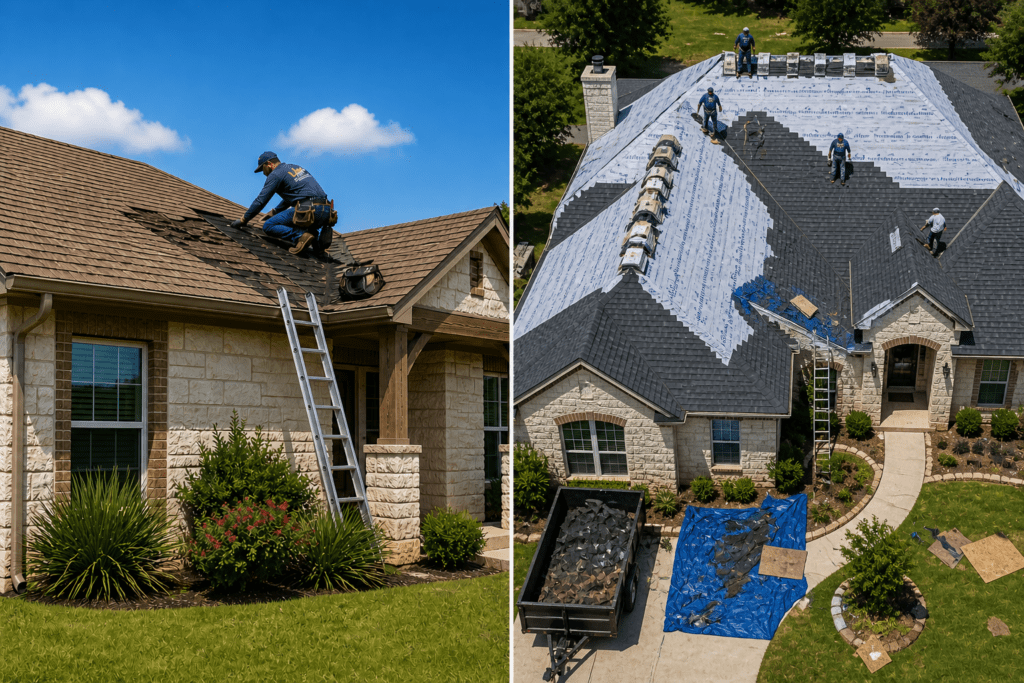
Roof repair or replacement in Round Rock, Texas comes down to how much damage is present and whether the roof can still perform the way it should. In many cases, what homeowners notice on the surface is only part of the story. A small leak or a few missing shingles can point to wear that has already spread underneath. Years of working on roofs across Central Texas show that early signs are often connected to larger patterns of aging, weather exposure, or previous repairs that did not fully address the problem.
Roofs in Round Rock, Texas take on constant stress from heat, storms, and shifting weather conditions throughout the year. Shingles expand and contract in the heat, sealants break down over time, and wind driven rain can find its way into weak spots that are not easy to see. Some roofs respond well to targeted repairs, while others continue to show problems because the system as a whole is wearing out. Looking at the full condition of the roof, not just the visible damage, is what helps homeowners choose the option that will actually hold up over time.
You may need roof repair in Round Rock when early signs of damage start to show, especially when small issues can quickly spread under Central Texas weather conditions.
You need roof repair in Round Rock when your roof starts showing signs of damage that can allow water in or weaken its ability to protect your home. Most homeowners first notice something inside, like a stain on the ceiling or a drip during a storm, but those signs usually mean the problem has already been there for a while. Based on what is commonly seen on roofs across Central Texas, early intervention is what prevents a small repair from turning into a larger and more expensive project.
Round Rock homes deal with steady heat, sudden storms, and strong winds that gradually wear down roofing materials. These conditions can loosen shingles, break down sealants, and expose vulnerable areas over time. When damage is caught early, repairs can be straightforward and effective. Waiting too long often leads to deeper issues that involve more than just the surface of the roof.
The early signs of roof damage in Round Rock are usually visible changes that indicate your roof is starting to lose its protective layer. Homeowners often overlook these warning signs because they do not always seem urgent, but they are reliable indicators that the roof needs attention. Years of inspections show that most major roofing problems started with small, noticeable changes that were easy to spot early on.
Common signs include changes in the appearance of shingles, water marks inside the home, or visible gaps around roof features. These are not random issues. They are signals that the roof system is starting to break down in specific areas. Paying attention to these details makes it easier to address the problem before it spreads.
You need roof repair in Leander TX when your roof has damage that affects its ability to shed water, resist wind, or protect the inside of your home. Common examples include missing shingles, curling shingles, cracked shingles, damaged flashing, roof leaks, exposed underlayment, loose vent boots, or storm damage after hail and high winds.
A repair often makes sense when the issue is limited to one area and the rest of the roof still has useful life left. For example, a few wind lifted shingles or a small flashing leak may not require full replacement if the surrounding materials are still performing well. The safest next step is a roof inspection that checks the visible surface, roof penetrations, attic conditions, and signs of hidden moisture.
Water stains or ceiling spots usually mean there is an active or developing roof leak. In most cases, water has already traveled through the roofing layers and reached the interior before it becomes visible. From experience, these stains often appear long after the initial entry point has formed, which means the damage may be more extensive than it looks.
The location of the stain does not always match where the leak starts. Water can move along decking, rafters, or insulation before it shows up inside your home. That is why even a small spot should be taken seriously. Identifying the source early helps prevent damage to insulation, drywall, and structural components.
Missing or curling shingles are a clear sign that your roof is becoming vulnerable to water intrusion. Shingles are designed to overlap and create a barrier, so when they lift, curl, or fall off, that protection is compromised. In Round Rock, this type of damage is often caused by heat exposure or strong winds that weaken the adhesive holding shingles in place.
Once shingles start to fail, nearby areas are more likely to follow. It is rarely limited to one spot. What begins as a small section of damage can spread as the surrounding shingles lose their strength. Addressing the issue early can prevent water from reaching the layers underneath.
Damaged flashing can lead to larger roofing problems because it protects the most vulnerable areas of the roof. Flashing is installed around chimneys, vents, and other roof penetrations where water is most likely to enter. When it cracks, lifts, or separates, it creates a direct path for water to get inside.
This type of damage is often overlooked because flashing issues are not always visible from the ground. In many cases, leaks that appear inside the home are traced back to flashing that has failed over time. Repairing or resealing these areas properly helps stop leaks at their source and prevents ongoing water damage.
Small roof issues get worse over time because they allow water and heat to slowly break down the layers that protect your home. For many Round Rock homeowners, a minor concern like a small leak or a loose shingle does not seem urgent at first. What actually happens is that the problem continues to spread beneath the surface, especially with the constant heat and sudden storms common in Central Texas. The longer it goes unaddressed, the more areas of the roof become involved.
From experience working on homes in Round Rock, early damage rarely stays in one place. Water follows the path of least resistance, moving through decking, insulation, and framing before it becomes visible inside. What could have been a simple repair often turns into a more involved fix because the underlying materials have already been affected. Addressing these issues early is what keeps repairs manageable and prevents long term damage.
A minor leak can affect your roof structure by slowly weakening the wood and support system beneath the shingles. Even a small amount of water entering over time can soften roof decking, cause wood to swell, and reduce the strength of the materials holding everything together. Many Round Rock homeowners are surprised to learn that structural damage often starts long before any major signs appear inside the home.
In Central Texas conditions, repeated exposure to moisture combined with heat can accelerate this process. Wood that stays damp for long periods becomes more vulnerable to rot and separation. Once the structure begins to weaken, repairs become more complex because the issue is no longer just on the surface. Catching a leak early helps protect the integrity of the entire roofing system.
Moisture can lead to mold growth and insulation damage when it becomes trapped in the attic or roof layers. When water enters through a leak, it often settles into insulation and surrounding materials, creating a damp environment that allows mold to develop. For homeowners in Round Rock, this is a common issue because heat and humidity can make these conditions worse over time.
Insulation that absorbs moisture loses its ability to regulate temperature, which can lead to higher energy costs and less comfort inside the home. Mold growth can also spread beyond the attic, affecting air quality and requiring additional cleanup. What starts as a small leak can quickly turn into a larger concern that impacts both the structure of the home and the living environment inside.
A roof leak in Round Rock can become serious quickly because water can spread beyond the roof and affect multiple parts of your home.
A roof leak in Round Rock homes can become serious quickly because water does not stay in one place once it enters the roofing system. Many homeowners assume a leak is only a surface issue, but in reality, water often travels through multiple layers before showing visible signs. In Round Rock, Texas, heat and storm conditions can speed up how fast that damage spreads, especially when leaks are left unattended.
From experience working with homeowners in this area, leaks that seem minor at first often lead to deeper problems inside the roof and throughout the home. What starts as a small entry point can affect insulation, wood framing, and interior finishes over time. The longer the leak continues, the more areas are exposed, which increases both the repair scope and the overall cost.
Damage behind the surface of a roof leak often involves materials that are not visible until the issue becomes advanced. For many Round Rock homeowners, the visible signs like stains or drips are only the final stage of a process that has been developing over time. Water can move through the roofing system and affect structural components before it ever becomes noticeable inside the home.
In Central Texas homes, repeated exposure to heat and moisture creates conditions where hidden damage can progress faster. Wood can weaken, insulation can break down, and moisture can remain trapped in enclosed spaces. This type of damage is harder to detect without a proper inspection, which is why early evaluation is important even when the issue appears small.
Leaks can affect the structure of your home by weakening the materials that support the roof and surrounding areas. When water reaches the decking or framing, it can cause the wood to soften, swell, and eventually lose strength. Many homeowners in Round Rock do not realize that structural damage can begin long before any visible signs of sagging or warping appear.
Over time, repeated moisture exposure can lead to rot and separation in critical areas of the roof structure. This makes the roof less stable and more vulnerable during storms or high winds. Addressing leaks early helps prevent damage from spreading to parts of the home that are more difficult and costly to repair.
Moisture impacts your attic and walls by creating an environment where materials break down and air quality can be affected. When water enters the attic, it often settles into insulation and drywall, which are not designed to handle prolonged moisture. For Round Rock homeowners, this can lead to reduced insulation performance and uneven indoor temperatures.
As moisture builds up, it can also create conditions where mold begins to grow. Walls and ceilings may start to show discoloration, peeling paint, or soft spots over time. These issues often develop gradually, which makes them easy to overlook until they become more noticeable and more difficult to fix.
A roof leak can affect other areas of the home because water tends to travel beyond the original entry point. Many Round Rock homeowners expect the damage to stay near the roof, but water can move along beams, insulation, and interior surfaces before settling in different areas of the house. This movement makes it harder to trace the source without a thorough inspection.
As the leak continues, it can impact floors, ceilings, and even lower levels of the home. What begins as a roofing issue can extend into multiple parts of the property if it is not addressed early. Understanding how water spreads helps explain why quick action is important when signs of a leak appear.
Water damage can spread beyond the roof because it follows the easiest path through the structure of the home. Once inside, water can travel along rafters, drip into insulation, and reach ceilings or walls in areas far from the original leak. This is a common situation for homeowners in Round Rock, especially after heavy storms or extended rainfall.
Over time, this spread can affect flooring, interior finishes, and even personal belongings. Damage that starts at the roof can end up impacting multiple rooms if the source is not addressed. Identifying and stopping the leak early helps limit how far the damage can go.
Electrical or foundation issues are possible when roof leaks are left unresolved for too long. Water can come into contact with wiring in ceilings or walls, which increases the risk of electrical problems. For Round Rock homeowners, this can lead to safety concerns that go beyond simple property damage.
In some cases, ongoing water intrusion can also affect how water drains around the home. Poor drainage can place added stress on the foundation over time, especially if water is consistently directed to the same area. While these outcomes are less immediate, they show how a roof leak can impact more than just the roofing system if it is not addressed properly.
Roof replacement in Round Rock becomes the better option when the roof shows widespread wear, ongoing issues, or has reached the end of its expected lifespan.
Roof replacement becomes the better option in Round Rock when the roof shows widespread wear or no longer responds well to repairs. Many homeowners hope a repair will solve the issue, but there comes a point where fixing one area does not prevent problems from appearing in another. In Central Texas conditions, roofs that have gone through years of heat, storms, and previous repairs often reach a stage where replacement provides a more reliable and lasting solution.
From experience working with Round Rock homeowners, replacement is usually recommended when the roof system as a whole is breaking down rather than failing in one isolated spot. Continuing to repair an aging roof can lead to repeated costs without solving the root issue. Looking at the overall condition, not just the visible damage, helps determine when replacement is the more practical and cost effective path.
The signs your roof is reaching the end of its life are consistent patterns of wear that affect large portions of the roof. Homeowners in Round Rock often notice these changes gradually, which can make them easy to overlook at first. Over time, these signs become more widespread and harder to ignore, indicating that the roofing materials are no longer performing as they should.
These patterns usually show up across multiple areas rather than in one isolated section. Instead of a single repair fixing the issue, the roof continues to show new problems. This is a clear indication that the materials have aged and the system is no longer providing dependable protection.
Shingles that are cracking, cupping, or falling off are a strong sign that the roof is no longer holding up against the elements. In Round Rock, Texas, prolonged heat exposure causes shingles to dry out and lose flexibility, which leads to visible cracking and curling. Once shingles begin to lose their shape, they can no longer form a proper seal against water.
When shingles start coming loose or falling off, it exposes the layers underneath to direct weather exposure. This type of damage rarely stays limited to one area. It often indicates that the surrounding shingles are also weakening, which makes replacement a more dependable option than repeated patchwork repairs.
Widespread wear across the roof means the materials have aged beyond the point where localized repairs can solve the problem. Many Round Rock homeowners notice this as uneven coloring, thinning shingles, or areas that look noticeably worn compared to others. These are signs that the roof has been exposed to years of environmental stress.
When wear is spread across multiple sections, repairing one area does not prevent failure in another. The roof may continue to develop new issues over time, which leads to ongoing maintenance costs. In these situations, replacing the roof provides a more stable and long term solution.
Age and repeated repairs play a major role in deciding whether to repair or replace a roof. Older roofs in Round Rock have already gone through cycles of expansion, contraction, and storm exposure that weaken materials over time. Even if repairs are done properly, the surrounding areas may continue to deteriorate.
Homeowners often reach a point where they have repaired the roof multiple times but still experience new issues. This pattern usually indicates that the roof system is nearing the end of its lifespan. At that stage, replacement becomes a more reliable way to restore full protection and avoid ongoing repairs.
Most roofs in Central Texas last around 15 to 25 years, depending on the materials used and how well the roof has been maintained. Asphalt shingles, which are common in Round Rock, tend to fall within this range, but extreme heat and storm activity can shorten their lifespan. Regular exposure to high temperatures causes materials to break down faster than in milder climates.
Homeowners in Round Rock often see signs of aging earlier if the roof has experienced multiple storms or has not been regularly inspected. Understanding the expected lifespan helps set realistic expectations for when replacement may be needed. It also helps homeowners plan ahead instead of reacting to sudden failures.
Repairs stop being cost effective when the roof continues to develop new problems after previous fixes. Many Round Rock homeowners notice that even after addressing one issue, another area starts to fail shortly after. This cycle can lead to repeated expenses without improving the overall condition of the roof.
When repair costs begin to add up and do not extend the life of the roof in a meaningful way, replacement becomes the more practical choice. Investing in a new roofing system provides consistent protection and reduces the need for ongoing maintenance. It also gives homeowners peace of mind knowing the issue has been fully resolved rather than temporarily managed.
| Choose Roof Repair If | Choose Roof Replacement If |
|---|---|
| Damage is limited to one area of the roof | Problems are showing up in multiple areas |
| The roof still has useful life left | The roof is older and nearing the end of its lifespan |
| Shingles and structure are mostly in good condition | Widespread wear is visible across the roof |
| The issue was caused by a recent storm or isolated damage | Damage is recurring even after previous repairs |
| Repairs can restore full protection | Repairs no longer solve the root problem |
| Costs are manageable and extend roof life | Ongoing repair costs are adding up |
| No signs of structural damage | Roof shows signs of structural wear or soft spots |
You decide between roof repair and replacement in Round Rock by looking at how widespread the damage is and whether the roof still has years of dependable performance left. Many homeowners in Round Rock are trying to avoid unnecessary costs, so the first instinct is often to repair. In practice, the right choice depends on whether the issue is isolated or part of a larger pattern caused by age, weather exposure, or past repairs.
From experience working with homes across Central Texas, the decision becomes clearer when you step back and look at the full condition of the roof, not just the visible problem. A single leak or damaged section can often be repaired successfully, but when multiple areas start showing issues, the roof may no longer be performing as a complete system. Taking the time to evaluate both the short term fix and the long term outcome helps homeowners make a decision that actually holds up.
A roof repair makes sense when the damage is limited and the rest of the roof is still in good condition. For many Round Rock homeowners, this applies after a minor storm or when a specific area has been affected while the rest of the roof remains intact. In these situations, a targeted repair can restore protection without the need for a full replacement.
Repairs are most effective when the roofing materials still have useful life left and have not reached a stage of widespread wear. If the surrounding shingles, flashing, and structure are still solid, fixing the damaged section can extend the life of the roof. The key is confirming that the issue is truly isolated and not part of a larger problem developing underneath.
Damage that is limited to one area is usually a strong sign that a repair is the right approach. In Round Rock homes, this often happens after localized wind damage or a small section of shingles has been affected. When the rest of the roof shows consistent condition and performance, focusing on that specific area can resolve the issue effectively.
The important part is making sure the damage has not spread beyond what is visible. Water can travel under shingles and affect nearby sections, so a proper inspection helps confirm that the problem is contained. When it is truly isolated, a repair can be both practical and cost effective.
A roof that still has useful life left is a good candidate for repair rather than replacement. Many Round Rock homeowners have roofs that are mid life and can continue to perform well with the right maintenance. If the shingles are still holding their shape, the structure is sound, and there are no recurring issues, repairs can help extend the roof’s lifespan.
Looking at the overall condition helps determine this. If most of the roof still appears consistent and has not been affected by widespread wear, repairing the damaged areas makes sense. This approach allows homeowners to get the most out of their existing roof without replacing it too early.
Replacement is the smarter long term choice when the roof is showing signs of failure in multiple areas or no longer responds well to repairs. Many Round Rock homeowners reach this point after dealing with repeated leaks or ongoing maintenance that does not solve the issue. In these cases, replacing the roof provides a more stable and predictable outcome.
From experience, continuing to repair an aging or failing roof often leads to more expenses without improving performance. A new roof restores full protection, improves energy efficiency, and eliminates the uncertainty of recurring problems. When the system as a whole is worn out, replacement becomes the more reliable investment.
Problems showing up in multiple areas usually indicate that the roof is no longer functioning as a complete system. In Round Rock, this often appears as leaks in different sections, uneven wear across the roof, or multiple areas needing repair within a short period. This pattern suggests that the materials are aging and failing together.
When issues are spread out, repairing one section does not prevent new problems from developing elsewhere. This leads to a cycle of ongoing repairs that can add up over time. In this situation, replacement offers a more consistent and long term solution.
A roof showing signs of structural wear is a strong indication that replacement may be necessary. Structural wear can include soft spots, sagging areas, or weakened decking beneath the surface. Many Round Rock homeowners do not notice these issues until they become more advanced, but they often develop gradually over time.
Once the structure is affected, repairs become more complex because the issue goes beyond the surface materials. Addressing structural concerns typically requires a more comprehensive approach, which is why replacement is often recommended. Restoring the full integrity of the roof ensures it can handle future weather conditions and provide long term protection.
| Weather Element in Round Rock | How It Affects Your Roof |
|---|---|
| High Heat and Sun Exposure | Dries out shingles, causing cracking, curling, and faster material breakdown over time. |
| Extreme Temperatures | Expansion and contraction weaken seals and can lead to gaps where water enters. |
| Heavy Rain | Tests weak areas of the roof and can expose leaks in flashing, valleys, and seams. |
| Strong Winds | Lifts or removes shingles and breaks their seal, making the roof more vulnerable to leaks. |
| Hail Storms | Damages shingles by loosening granules and weakening their ability to protect against water. |
| Poor Ventilation | Traps heat in the attic, increasing roof temperature and accelerating material wear. |
| Moisture and Humidity | Leads to insulation damage, mold growth, and deterioration of wood structures. |
Round Rock weather affects your roof by constantly stressing roofing materials through heat, storms, and changing conditions throughout the year. For many homeowners in Round Rock, Texas, roofing problems are not caused by a single event but by the gradual impact of weather over time. Prolonged sun exposure, sudden storms, and shifting temperatures all work together to weaken shingles, sealants, and structural components.
From experience working on roofs across Central Texas, weather related wear is one of the most common reasons roofs start to fail earlier than expected. Materials expand during hot days and contract when temperatures drop, while wind and rain test every weak point. Understanding how local weather affects your roof helps explain why regular inspections and timely repairs are necessary to keep your home protected.
Heat impacts roofing materials by causing them to dry out, lose flexibility, and break down over time. In Round Rock, Texas, roofs are exposed to long periods of direct sunlight, which gradually weakens shingles and reduces their ability to seal properly. Many homeowners notice this as curling edges, cracking, or areas that look worn even without visible storm damage.
High temperatures also affect the layers beneath the shingles. Sealants can soften and lose their grip, while underlayment can become more vulnerable as it ages. Over time, this continuous exposure to heat reduces the overall lifespan of the roof and makes it more susceptible to leaks during storms.
High temperatures can cause shingles to wear faster by accelerating the aging process of the materials. In Round Rock homes, shingles are often exposed to intense sunlight for extended periods, which dries out the protective oils within them. As shingles lose flexibility, they become more brittle and prone to cracking or breaking.
This faster wear means shingles are less able to withstand wind and rain when storms arrive. Homeowners may start to see granule loss, curling, or uneven surfaces across the roof. Addressing these signs early helps prevent further damage and extends the life of the roofing system.
Heat impacts roofing materials by causing them to dry out, lose flexibility, and break down over time. In Round Rock, Texas, roofs are exposed to long periods of direct sunlight, which gradually weakens shingles and reduces their ability to seal properly. Many homeowners notice this as curling edges, cracking, or areas that look worn even without visible storm damage.
High temperatures also affect the layers beneath the shingles. Sealants can soften and lose their grip, while underlayment can become more vulnerable as it ages. Over time, this continuous exposure to heat reduces the overall lifespan of the roof and makes it more susceptible to leaks during storms.
Storms and wind affect roof performance by putting direct pressure on shingles, flashing, and exposed areas of the roof. In Round Rock, Texas, sudden storms can bring strong winds and heavy rain that test how well the roof is holding together. Even a roof that looks fine from the ground can develop issues after a single storm.
From experience, storm damage is not always obvious right away. Wind can lift shingles just enough to break their seal, while rain can enter through small openings that were previously sealed. Over time, these small changes can lead to leaks and more widespread damage if they are not identified early.
Hail and wind can cause hidden damage by weakening roofing materials without leaving obvious signs from the ground. In Round Rock, hail can impact shingles and loosen the granules that protect them, while strong winds can lift edges and create gaps. These issues may not be visible right away but can reduce the roof’s ability to repel water.
Many homeowners do not realize damage has occurred until a leak develops later on. Hidden damage often affects the protective layers of the roof, making it more vulnerable during the next storm. This is why inspections after severe weather are important, even when the roof appears intact.
Ventilation matters for roof health because it helps regulate temperature and moisture inside the attic. In Round Rock homes, poor ventilation can trap heat during the summer, which increases stress on roofing materials from the inside. Many homeowners focus on the exterior condition of the roof, but airflow plays a major role in how long the roof lasts.
Proper ventilation allows heat and moisture to escape, reducing the risk of damage to both the roof structure and insulation. Without it, temperatures inside the attic can rise significantly, which speeds up material breakdown and creates conditions where moisture can build up over time.
Poor airflow can increase heat and moisture problems by trapping both inside the attic space. In Round Rock, Texas, this often leads to higher attic temperatures that put additional strain on the roof from below. Over time, this heat buildup can cause shingles to age faster and reduce their effectiveness.
Moisture that cannot escape can settle into insulation and wood structures, creating long term issues such as mold growth or material deterioration. Many homeowners notice rising energy costs as well, since the home becomes harder to cool. Improving airflow helps maintain a balanced environment that protects both the roof and the interior of the home.
A proper roof inspection in Round Rock should cover both the exterior and interior of your home to identify visible and hidden issues before they become costly problems.
A roof inspection in Round Rock should include a full evaluation of both the exterior roofing system and the interior areas that can be affected by hidden damage. For many Round Rock homeowners, an inspection is the first step in understanding whether a visible issue is minor or part of a larger problem. A proper inspection goes beyond a quick visual check and focuses on how well the entire system is performing under Central Texas conditions.
From experience working on homes across Round Rock, a thorough inspection is what separates a temporary fix from a long term solution. It helps identify not only where damage is visible but also where problems may be developing beneath the surface. This level of detail gives homeowners clarity and helps avoid making decisions based on incomplete information.
The parts of the roof that are checked during an inspection include all major components that protect the home from water and weather exposure. For Round Rock homeowners, this means looking at the roof as a complete system rather than focusing on a single issue. Each component plays a role in keeping the roof sealed and functioning properly.
Inspectors typically evaluate the condition of shingles, flashing, vents, and other exposed areas where damage is most likely to occur. These areas are often the first to show signs of wear due to heat, wind, and storms. A detailed review helps determine whether the damage is isolated or affecting multiple sections of the roof.
Shingles, flashing, and vents are inspected closely because they are the most common sources of leaks and roof failures. In Round Rock, Texas, shingles are checked for cracking, curling, and granule loss caused by prolonged heat and storm exposure. Flashing is examined around chimneys, vents, and other openings to ensure it is still sealed and secure.
Vents are also reviewed to make sure they are properly installed and not allowing water to enter. Even small gaps or worn seals in these areas can lead to leaks over time. Identifying issues early in these key components helps prevent more extensive damage from developing.
Interior areas are evaluated during a roof inspection to identify signs of damage that are not visible from the outside. For many Round Rock homeowners, problems inside the attic or ceiling space provide important clues about the condition of the roof. These areas often show the effects of leaks before the exterior damage becomes obvious.
Inspectors typically check the attic, insulation, and surrounding structures for moisture, staining, or signs of deterioration. This helps confirm whether water has already entered the home and how far it may have spread. A complete inspection looks at both the source of the problem and its impact inside the home.
The attic is checked for moisture and ventilation issues because it reflects how well the roof is protecting the home. In Round Rock homes, trapped heat and moisture can build up quickly, especially during hot weather. This can lead to insulation damage, wood deterioration, and reduced airflow over time.
Inspectors look for signs such as damp insulation, discoloration, or poor ventilation that may be contributing to roof problems. These conditions often develop gradually and may not be noticed by homeowners right away. Addressing attic issues helps improve overall roof performance and prevents further damage.
A roof inspection helps you make the right decision by providing a clear picture of the roof’s overall condition. Many Round Rock homeowners are unsure whether they need a simple repair or a full replacement, and an inspection removes that uncertainty. It identifies the extent of the damage and shows whether the issue is isolated or part of a larger concern.
From experience, homeowners make better decisions when they understand what is happening across the entire roof. Instead of guessing, they can weigh their options based on actual findings. This approach helps avoid unnecessary repairs or premature replacement.
You will get clear repair or replacement recommendations when the inspection is thorough and properly explained. In Round Rock, homeowners benefit from seeing exactly what is happening on their roof, often through photos and detailed observations. This makes it easier to understand why a certain solution is being suggested.
Clear recommendations are based on the condition of the roof, the extent of the damage, and how well the system is expected to perform moving forward. When everything is explained in a straightforward way, homeowners can make confident decisions without feeling uncertain about the next step.
Roof repairs in Round Rock help prevent future leaks when they address the root cause and restore how the roofing system is designed to function.
Repairs that prevent future leaks in Round Rock are the ones that address the root cause of the problem and restore the roof as a complete system. Many Round Rock homeowners have dealt with leaks that come back after a quick fix, which usually happens when only the visible issue is treated. In Central Texas conditions, repairs need to account for heat, storms, and how water moves across the roof, not just where it shows up inside.
From experience, long lasting repairs focus on proper installation, correct materials, and sealing vulnerable areas the right way. A repair should not just stop the leak today but also hold up through the next storm and the next season of heat. When repairs are done correctly, they reduce the chance of repeat issues and give homeowners more confidence in their roof’s performance.
The techniques that fix roof problems the right way involve restoring how each component of the roof works together. For Round Rock homeowners, this means more than patching a spot where water entered. It requires making sure shingles are installed correctly, flashing is sealed properly, and water can flow off the roof without finding new entry points.
Proper repair techniques are based on how the roof was designed to function in the first place. When repairs follow those principles, they are more effective and last longer. Skipping steps or using temporary fixes often leads to recurring leaks, especially with the weather conditions seen in Central Texas.
Proper shingle replacement makes a difference because it restores the roof’s ability to shed water as intended. In Round Rock, shingles must be installed with correct alignment, secure fastening, and proper overlap to create a continuous barrier. When this process is done correctly, it prevents water from working its way underneath.
Improper installation can leave small gaps or weak points that are not obvious right away. Over time, these areas can allow water to enter, especially during heavy rain or wind driven storms. Homeowners benefit from repairs that match the original system and maintain consistent protection across the roof.
Flashing repairs can stop recurring leaks because flashing protects the most vulnerable parts of the roof. Areas around chimneys, vents, and roof transitions are where leaks commonly start in Round Rock homes. When flashing is damaged or not sealed correctly, water can enter even if the shingles are in good condition.
Repairing flashing properly involves resealing or replacing it so water is directed away from these openings. From experience, many repeat leaks are traced back to flashing that was not fully addressed during earlier repairs. Fixing these areas correctly helps eliminate one of the most common sources of ongoing problems.
Materials and installation methods matter because they determine how well a repair will hold up over time. For Round Rock homeowners, using materials that can handle heat, moisture, and storm exposure is critical. Even a well done repair can fail if the materials are not suited for the local climate.
Installation methods are just as important as the materials themselves. Repairs need to follow proven practices that ensure each layer of the roof works together. When both materials and installation are handled correctly, the repair becomes more durable and less likely to fail under stress.
Better materials can reduce the risk of future issues by providing stronger protection against the conditions seen in Round Rock, Texas. High quality shingles, sealants, and flashing materials are designed to handle heat and weather exposure more effectively. This helps extend the life of the repair and reduces the chance of new problems developing.
For many homeowners, investing in better materials during a repair can prevent the need for repeated fixes. When combined with proper installation, these materials create a more reliable roofing system. This approach helps maintain consistent protection and gives homeowners greater peace of mind over time.
Roofing permits in Round Rock may be required depending on the scope of the work, and proper documentation helps protect homeowners during and after the project.
Roofing projects in Round Rock may require permits depending on the scope of the work being done. For many Round Rock homeowners, smaller repairs do not always need approval, but larger projects that involve structural changes or full replacements often do. Local building requirements are in place to make sure work is done safely and meets current standards.
From experience working with homeowners in Central Texas, permits are not something to overlook. Proper permitting helps ensure the work is inspected and completed correctly, which protects both the home and the homeowner. It also helps avoid complications later if the property is sold or if questions come up about past work.
Structural repairs usually require approval because they affect the integrity of the roof and the home as a whole. In Round Rock, this includes work on roof decking, framing, or any part of the structure that supports the roofing system. These repairs need to meet specific standards to ensure the home remains safe and stable.
Without proper approval, there is a risk that the work may not meet code requirements, which can create problems later. Inspections tied to permits help confirm that repairs are done correctly. This gives homeowners confidence that the structure has been properly restored.
Permits are typically needed when roofing work goes beyond minor repairs and involves more significant changes to the structure. In Round Rock, this often includes full roof replacements, decking repairs, or modifications that affect how the roof is built. These types of projects require oversight to confirm they meet local building codes.
Many homeowners are unsure where the line is between a simple repair and a project that needs approval. In general, if the work changes the structure or replaces major components of the roof, a permit is more likely required. Checking this early helps avoid delays or issues during the project.
Documentation is important because it provides a clear record of the work that was done and the condition of the roof before and after repairs. For Round Rock homeowners, this can be especially helpful when dealing with storm damage or planning future improvements. Photos, notes, and inspection reports all help create a complete picture of the project.
From experience, having proper documentation makes it easier to answer questions down the line. It helps verify that the work was completed correctly and that any issues were addressed properly. This can be valuable not only during the project but also in the future.
Documentation can help with insurance claims and future resale by showing proof of the roof’s condition and the work performed. In Round Rock, homeowners often need clear records when dealing with storm related damage. Photos and detailed reports can support claims and help explain what repairs were necessary.
For resale, documentation gives potential buyers confidence that the roof has been properly maintained. It shows that the work was completed with attention to detail and in line with local requirements. This added transparency can make the process smoother and help protect the value of the home.
If you notice roof damage in Round Rock, taking the right steps early can help prevent the problem from spreading and give you a clear path forward.
You should take action quickly when you notice roof damage in Round Rock to prevent the problem from getting worse. Many Round Rock homeowners are not sure how urgent the situation is, especially if the damage looks minor from the ground. In reality, even small issues can allow water in and lead to larger problems over time, especially with the heat and storms common in Central Texas.
From experience, the homeowners who address damage early have more options and avoid more expensive repairs later. Waiting too long often allows the issue to spread into other parts of the roof or even inside the home. Taking a few simple steps right away helps protect your property and gives you a clearer understanding of what needs to be done next.
The first steps you should take are to assess the situation safely and gather as much information as possible. For Round Rock homeowners, this does not mean climbing onto the roof but instead looking for visible signs from the ground or inside the home. Noticing where the problem appears and when it started can help narrow down the cause.
Taking early action is not about fixing the issue yourself but about understanding it before it becomes worse. A careful approach helps avoid unnecessary risks while making sure the problem is not ignored. These first steps set the foundation for making a well informed decision.
You should schedule an inspection right away because it is the most reliable way to understand the extent of the damage. In Round Rock, Texas, weather conditions can make roof issues progress faster than expected. An inspection helps confirm whether the damage is isolated or part of a larger concern.
From experience, many homeowners find that what looks minor can involve more than one area of the roof. Getting a professional evaluation early provides clarity and helps prevent surprises later. It also allows you to address the issue before it spreads further.
It is helpful to document the damage because it creates a record of what you are seeing and when it occurred. For Round Rock homeowners, taking photos of visible issues such as missing shingles or interior stains can be useful when discussing the problem with a professional. It also helps track whether the damage is changing over time.
Documentation becomes especially important if the damage is related to a storm. Having clear images and notes can make it easier to explain the situation and support any future decisions. It adds another layer of understanding that helps ensure nothing is overlooked.
You can get a clear plan moving forward by combining what you have observed with a professional evaluation. Many Round Rock homeowners feel uncertain about whether to repair or replace their roof, especially when the issue is not straightforward. A clear plan comes from understanding both the current condition and the expected performance of the roof.
From experience, a step by step approach works best. This includes identifying the source of the problem, evaluating how widespread it is, and considering the long term outcome of each option. When all of this is clearly explained, homeowners can move forward with confidence.
A professional can help you compare your options by explaining what repair or replacement would involve based on your roof’s condition. For Round Rock homeowners, this is often where the decision becomes clearer. Instead of guessing, you can see how each option addresses the problem and what to expect over time.
A good evaluation breaks down the differences in terms of cost, durability, and long term performance. This helps you choose the option that fits your situation without overcommitting or delaying necessary work. Having that level of clarity makes it easier to move forward with confidence and avoid repeated issues.
Round Rock homeowners can get help with roof repair or replacement by reaching out to a local team that provides clear communication, honest recommendations, and a straightforward process from inspection to completion.
You can get help with your roof in Round Rock by working with a local roofing company that provides a clear inspection, honest recommendations, and a straightforward plan. Many Round Rock homeowners feel unsure about who to trust, especially when dealing with leaks, storm damage, or an aging roof. The right support starts with understanding what is actually happening on your roof and what options make sense for your home.
From experience working with homeowners across Central Texas, the process becomes much easier when everything is explained in a simple and transparent way. Instead of feeling pressured into a decision, homeowners should be able to see the condition of their roof, understand the problem, and move forward with confidence. Getting the right help is not just about fixing the issue, it is about making sure it is handled properly the first time.
Homeowners choose Legacy Roofing Pros because they want clear answers, reliable work, and a process they can trust. For many Round Rock homeowners, roofing projects can feel overwhelming, especially when the damage is not fully visible. Having a team that focuses on education and transparency makes a difference in how confident homeowners feel about their decisions.
Legacy Roofing Pros works with homeowners to assess the full condition of the roof and explain what is needed in a way that makes sense. The goal is to provide solutions that match the actual situation, whether that involves a repair or a full replacement. This approach helps homeowners avoid unnecessary work while still protecting their home for the long term.
You get clear communication and honest recommendations when your roof is evaluated with transparency and attention to detail. Many Round Rock homeowners are concerned about being told they need more work than necessary, which is why clear explanations matter. Seeing the condition of your roof and understanding what is being recommended helps remove that uncertainty.
From experience, homeowners feel more comfortable moving forward when they know why a repair or replacement is being suggested. Honest recommendations are based on the actual condition of the roof, not assumptions. This makes it easier to choose the right solution without second guessing the decision.
You can schedule a roof inspection by reaching out to a roofing professional who can evaluate your roof and provide a clear assessment. For Round Rock homeowners, this step is often the most important because it turns uncertainty into a defined plan. Whether the concern is a recent storm or signs of aging, an inspection helps identify what is really going on.
The process is designed to be simple and informative. Homeowners can expect a thorough evaluation and a clear explanation of findings. This makes it easier to understand the condition of the roof and decide what steps to take next.
You can get a free estimate and expert guidance to help you understand your options and plan your next steps. Many Round Rock homeowners want to know the cost and scope of work before committing to anything, and a detailed estimate provides that clarity. It outlines what needs to be done and what to expect moving forward.
Expert guidance goes beyond pricing by helping homeowners compare repair and replacement options based on their specific situation. This ensures that the decision is based on what will work best for the home over time. Having both a clear estimate and professional insight allows homeowners to move forward with confidence.
Your home should stay protected and respected throughout any roofing project, not just when the work is finished. Many Round Rock homeowners worry about damage to their property during repairs or replacement, which is why having the right team and process in place makes a difference from start to finish.
If you are dealing with roof damage, trying to decide between repair or replacement, or simply want a clear understanding of your roof’s condition, support is available. Legacy Roofing Pros provides free inspections, straightforward estimates, and clear updates so you always know what is happening. Homeowners across Central Texas rely on a process that focuses on accuracy, transparency, and long term results that truly protect their home.
CONTACT US TODAY!
Fill out the form below to schedule your free roof inspection with Legacy Roofing Pros and get a clear, honest assessment of your roof.
Tell us what’s going on and our team will follow up quickly.