
Monday to Friday
Drop your queries
Round Rock, TX 78681,
United States
Head Office
Most roof replacements in Round Rock take 1 to 3 days. Learn what affects the timeline, including roof size, materials, weather, damage, and cleanup.
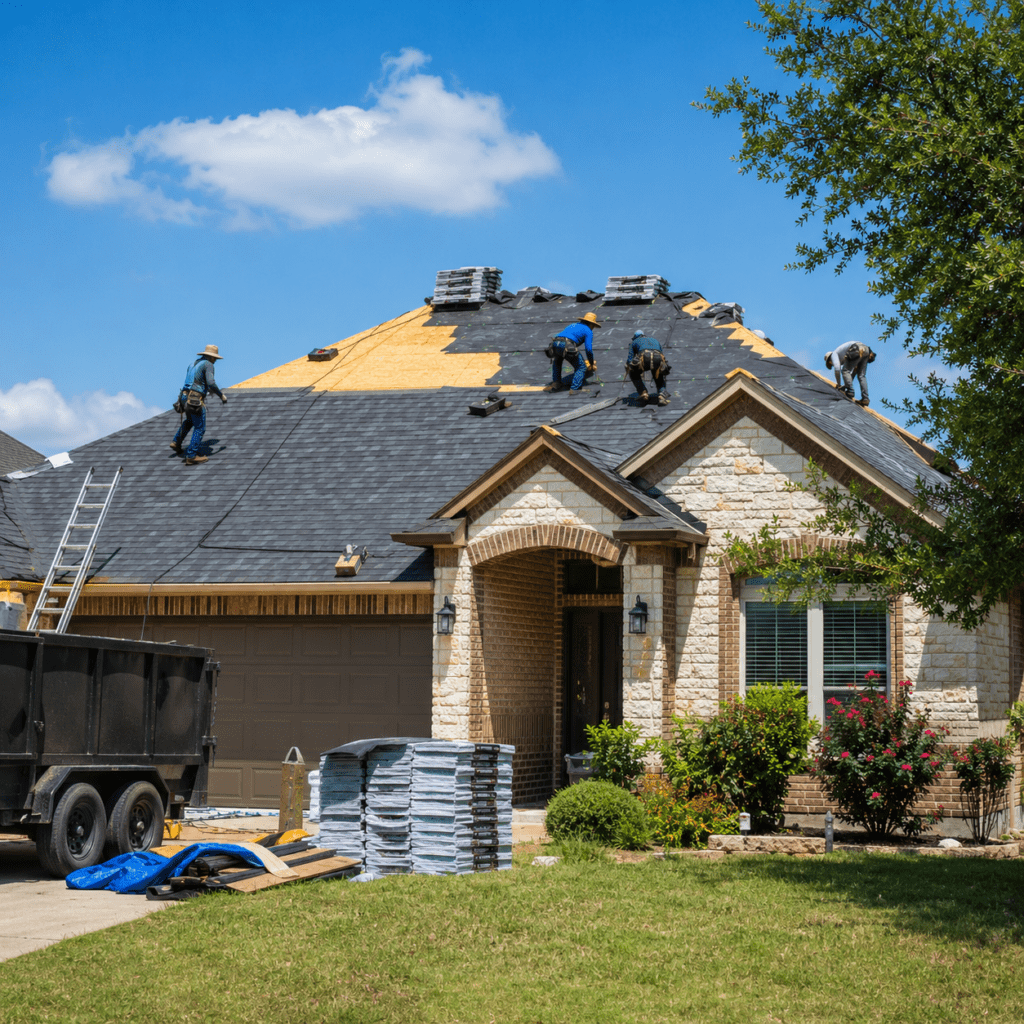
Most roof replacements in Round Rock take 1 to 3 days, especially for a typical asphalt shingle roof on a residential home. Smaller single story homes may be completed in one day, while larger homes, steep rooflines, complex roof shapes, hidden decking damage, or weather delays can extend the roof replacement timeline.
For Round Rock homeowners, the exact timeline depends on several details that need to be checked before work begins. Roof size, roof shape, material type, roof access, storm damage, decking condition, and contractor planning all affect how long a roof replacement in Round Rock may take. A simple asphalt shingle roof with clear access and no hidden damage can move quickly, but a roof with multiple valleys, chimneys, skylights, or damaged decking may need more time to complete properly.
A residential roof replacement should not be rushed just to meet a one day schedule. The goal is to remove the old materials, inspect the roof deck, repair problem areas, install the new roofing system correctly, clean the property, and complete a final inspection. Legacy Roofing Pros helps homeowners in Round Rock and Central Texas understand what to expect before the project starts so they can plan around noise, driveway access, yard space, cleanup, and weather conditions with more confidence.
Most roof replacements in Round Rock take 1 to 3 days for a typical home with asphalt shingles. A smaller single family home with a simple roof design may be completed in one day, while a larger home or a roof with steep slopes, multiple valleys, chimneys, skylights, or other detailed areas may take two to three days or longer.
The average roof replacement timeline can also change once the old roofing materials are removed. If the roof decking is solid and the crew has clear access around the property, the project can usually move faster. If soft decking, storm damage, moisture issues, or structural concerns are found, the residential roof replacement may need extra repair time before the new roofing system can be installed.
The best way to know how long a roof replacement in Round Rock will take is to schedule a roof inspection before the project begins. A roofing contractor can look at the roof size, slope, damage level, material needs, ventilation details, and property access to give a more accurate timeline. This helps Round Rock homeowners plan around noise, parking, yard access, cleanup, and weather delays instead of relying on a general estimate.
A roof replacement timeline can vary by project type because each roof has different materials, size, access, and roof complexity. In Round Rock, an asphalt shingle roof on a smaller home may only take one day, while a metal roof, slate roof, concrete roof, or larger complex roof may take several days because the materials and installation details require more time.
The table below gives a general expected duration for common residential roof replacement projects. These are planning estimates, not guaranteed timelines, because a roof inspection is still needed to check the actual roof condition, decking, slope, access points, weather concerns, and material requirements.
| Project Type | Expected Timeline | Notes |
|---|---|---|
| Small single story asphalt shingle roof | 1 day | Usually faster when access is clear and no hidden damage is found. |
| Average asphalt shingle roof | 1 to 3 days | Common timeline for many Round Rock homes. |
| Larger or complex roof | 2 to 3 plus days | Steep slopes, valleys, chimneys, and skylights can add time. |
| Metal roof | 2 to 5 days | Requires more measuring, fastening, flashing, and detail work. |
| Slate or concrete roof | 5 to 14 days | Heavier materials often require slower and more careful installation. |
This timeline helps homeowners understand what to expect before scheduling a roof replacement, but the exact duration should come from an on site inspection. A professional roofer can review the roof type, confirm whether the decking is sound, check for storm damage, and explain whether the project is likely to take one day, several days, or longer based on the specific home.
A roof replacement usually includes inspection and preparation, material delivery, removal of old roofing materials, decking repair, installation of new roofing materials, final cleanup, nail pickup, and final inspection. This roof replacement process helps make sure the old roof is removed properly, the roof deck is checked for damage, and the new roofing system is installed on a clean and stable surface.
For Round Rock homeowners, knowing what happens during a roof replacement can make the project feel less stressful. The process may be noisy and active, but each step has a purpose. The crew needs room for materials, tools, debris removal, and safe access around the home. A clear plan also helps reduce delays and keeps the project organized from the first inspection to the final walkthrough.
A typical roof replacement process may include:
A well managed roof replacement should not only focus on installing new shingles. The crew should also check the roof structure, protect the property, manage debris, and communicate clearly with the homeowner.
The main factors that affect roof replacement timeline are roof size, roof shape, roof pitch, material type, weather, roof access, hidden damage, decking repair needs, material availability, and contractor experience. This is why one Round Rock home may be finished in one day while another home nearby may take two, three, or more days to complete.
Roof size has a direct effect because larger roofs require more tear off, more roof decking inspection, more installation time, and more cleanup. Roof shape and roof complexity also matter. A simple roof with easy access is usually faster, while a roof with steep slopes, several valleys, chimneys, skylights, dormers, or multiple roof sections takes more time because the crew must handle detailed areas carefully.
Weather is another major factor for Round Rock homeowners. Rain, high winds, hail, lightning, and extreme Central Texas heat can slow or pause roofing work for safety and installation quality. Material availability can also affect scheduling, especially if the homeowner chooses a specialty roofing product or a color that needs to be ordered before the project begins.
Hidden damage can extend the timeline once old roofing materials are removed. Soft decking, rotted wood, moisture damage, or structural concerns must be repaired before the new roofing system is installed. An experienced crew can help keep the project organized through careful inspection, clear planning, proper equipment, and good communication, but the roof still needs enough time for the work to be done correctly.
| Factor | How It Affects the Timeline | What Round Rock Homeowners Should Know |
|---|---|---|
| Roof size and square footage | Larger roofs take longer because there is more material to remove, more decking to inspect, and more new roofing to install. | Smaller single story homes may be completed faster, while larger homes, attached garages, additions, and extended rooflines can add time. |
| Roof shape and complexity | Simple roof designs are faster to replace, while steep slopes, multiple valleys, dormers, chimneys, skylights, and roof penetrations require more careful work. | Complex roof details need proper flashing, sealing, cutting, and material placement to help prevent leaks. |
| Damage found during the project | Hidden damage can add time if soft decking, rotted wood, moisture damage, sagging areas, or structural problems are found after tear off. | Some damage is not visible until old roofing materials are removed, so decking repair may extend the schedule. |
| Roof access and jobsite setup | Clear roof access helps crews move materials, tools, and debris more efficiently. Limited parking, fencing, landscaping, or tight spaces can slow the job. | Clearing the driveway, yard space, and access points before work begins can help keep the project moving. |
| Material availability | Roofing material delays can affect the start date or project schedule, especially for specialty products, custom colors, or less common systems. | Confirming materials before the project starts helps reduce avoidable delays. |
| Weather conditions | Rain, high winds, hail, extreme heat, and unsafe roof conditions can slow or pause roofing work. | Central Texas weather can change quickly, so homeowners should allow some flexibility in the roof replacement timeline. |
| Crew size and equipment | An experienced crew with proper tools, roof loaders, nail guns, safety equipment, and debris management can often work more efficiently. | A professional roofing company should also complete a detailed inspection, communicate clearly, and perform a final quality check. |
| Contractor experience | Experienced roofers are better prepared to plan the project, manage safety, handle roof details, and respond to hidden issues. | Less experienced crews or DIY projects may take longer because roof replacement requires planning, safety awareness, and correct installation details. |
Roofing materials change the timeline because each material type has different installation steps, handling needs, weight, and detail requirements. Asphalt shingles are usually the fastest option for a residential shingle roof replacement, while metal roof systems, slate roof materials, concrete roof materials, tile, and specialty roofing systems often take longer to install.
For many Round Rock homes, asphalt shingles are common because they are easier to stage, carry, align, and fasten compared to heavier or more detailed materials. Products such as Owens Corning shingles, GAF shingles, TAMKO shingles, Atlas shingles, and other asphalt roofing options can often be installed faster than specialty systems when the roof deck is in good condition and the layout is not too complex.
Metal roofing can take more time because panels must be measured, cut, fastened, sealed, and flashed carefully. A metal roof may also require more detailed work around edges, valleys, roof penetrations, and transitions. Slate roof and concrete roof systems can take even longer because the materials are heavier and often require slower placement, careful alignment, and extra attention to the roof structure.
The underlayments, flashing, ventilation components, and waterproofing layers also affect the timeline because the roof is more than the visible outer material. A professional roofer should explain how the selected roofing materials may change the schedule before the project begins, so homeowners can plan for the expected duration and understand why some roof systems take longer than others.
| Roofing Material | Expected Timeline | How It Affects the Project | What Round Rock Homeowners Should Know |
|---|---|---|---|
| Asphalt shingles | 1 to 3 days | Asphalt shingle roof replacement is usually the fastest option because the materials are common, easier to stage, and familiar to experienced residential roofing crews. | A typical Round Rock roof with asphalt shingles may be completed quickly, but large size, steep pitch, storm damage, or detailed roof areas can add time. |
| Metal roof | 2 to 5 days | Metal roof replacement often takes longer because metal panels require careful measuring, alignment, fastening, flashing, and sealing. | Standing seam metal roof systems or custom metal panels may take longer than simpler metal roof designs. |
| Slate roof | 5 to 14 days | Slate roof replacement usually takes more time because slate is heavier, more detailed, and requires careful handling during installation. | The roofer may need to review the roof structure before installation because material weight can affect the project plan. |
| Concrete roof | 5 to 14 days | Concrete roof replacement can take longer because the materials are heavy and require slower, more careful placement. | Homes with complex roof shapes, steep slopes, valleys, chimneys, or skylights may need extra installation time. |
| Tile roof | Several days to 2 weeks | Tile roof replacement requires careful layout, fastening, and handling to protect the materials and support proper water drainage. | Tile is often chosen for appearance and durability, but it usually needs a longer installation window than asphalt shingles. |
| Specialty roofing systems | Varies by material and roof design | Specialty roof replacement may take longer because premium roofing materials, custom details, underlayments, and flashing systems require more planning. | A professional roof inspection helps confirm the roof structure, material needs, expected timeline, and any preparation required before installation. |
Round Rock weather can change a roof replacement timeline because roofing work depends on safe, dry, and workable conditions. Rain delay, thunderstorms, hail, high winds, lightning, extreme heat, and freezing temperatures can all slow down or pause a roof replacement in Central Texas.
Wet roof surfaces can be slippery, and exposed roof areas need to be protected from water before work continues. If rain starts during a project, the crew may need to secure the roof, cover vulnerable areas, and wait for dry weather before installation resumes. This helps protect the home from water intrusion and helps the crew work under safer conditions.
Texas heat can also affect the pace of roofing work, especially during summer. Roof surfaces can become much hotter than the air temperature, which can make the work more demanding and may require adjusted work hours, extra breaks, or cooler work windows. Mild weather is usually better for roof replacement because crews can work more steadily and materials can be installed under more manageable conditions.
For Round Rock homeowners, weather delays are not always avoidable, but good planning can reduce confusion. A professional roofer should watch the forecast, explain possible delays, and communicate clearly if rain, hail, high winds, extreme heat, or freezing temperatures affect the schedule.
| Weather Factor | How It Can Affect the Timeline | What Round Rock Homeowners Should Know |
|---|---|---|
| Texas heat and sun exposure | Central Texas heat can slow the installation pace, especially during summer roof replacement projects when roof surfaces become very hot. | Crews may need breaks, adjusted hours, or cooler work windows to support worker safety and proper installation conditions. |
| Rain delay | Rain can pause roof replacement because wet roof surfaces are unsafe and exposed roof areas need protection from water damage. | A roofing crew may need to secure materials, cover open areas, use tarping, and wait for dry weather before continuing. |
| Thunderstorms | Thunderstorms can delay roofing work because lightning, heavy rain, and sudden wind can create unsafe roof conditions. | Round Rock weather can change quickly, so homeowners should allow some flexibility in the roof replacement timeline. |
| Hail and storm damage | Hail can damage shingles, remove granules, crack materials, and create the need for roof inspection or replacement. | Storm related demand can affect scheduling when many Round Rock homeowners need inspections after the same storm. |
| High winds | High winds can make roof installation unsafe, especially on steep roofs or when crews are handling shingles, underlayment, panels, or loose materials. | A professional roofer may pause work to reduce the risk of falls, material movement, debris issues, or poor installation. |
| Extreme heat | Extreme heat can make roofing work more physically demanding and may slow crew movement, material handling, and installation pace. | Planning around cooler parts of the day can help protect the crew while keeping the project moving safely. |
| Freezing temperatures | Freezing temperatures can affect safety, material handling, and installation conditions when roof surfaces are cold or slippery. | Mild weather and dry weather are usually better for roof replacement because crews can work more steadily and safely. |
| Unsafe roof conditions | Unsafe roof conditions can delay work when wet surfaces, strong winds, loose materials, or steep slopes increase jobsite risks. | Weather delays help protect the home, the roofing crew, and the quality of the roof installation. |
A one day roof replacement can take longer when hidden damage, weather changes, roof complexity, or access issues slow the project. A simple asphalt shingle roof may be completed in one day, but extra repair needs or unsafe conditions can extend the schedule.
One common reason is hidden damage under the old roofing materials. Damaged decking, soft wood, moisture problems, or structural concerns may not be fully visible until the tear off begins. If the crew finds damaged decking, those areas need to be repaired before the new roofing system can be installed.
Roof design can also affect the timeline. A home with steep roof pitch, multiple valleys, chimneys, skylights, dormers, or several roof sections usually takes longer than a simple roof shape. These areas require careful flashing, sealing, cutting, and installation so the roof can shed water properly and reduce leak risks.
Weather and jobsite conditions can also delay a one day project. Rain, high winds, extreme heat, material delays, limited access, blocked driveway space, or a larger than expected roof area can all make roof replacement take longer. For Round Rock homeowners, the best way to avoid surprises is to schedule a detailed inspection before work begins and ask the contractor what could affect the expected completion time.
The best time to get a personalized roof replacement timeline is before scheduling the project, because every Round Rock home has different roofing conditions. A local roofing professional needs to inspect the roof size, pitch, shape, material type, damage level, roof access, and weather concerns before giving a realistic schedule.
A general timeline can help homeowners plan, but it cannot account for every detail on a specific property. A roof replacement in Round Rock may take longer if the roof has steep slopes, multiple valleys, storm damage, hidden decking issues, limited access, or specialty roofing materials. A roofing consultation helps identify these factors early so homeowners can better plan around noise, parking, yard access, material delivery, cleanup, and daily routines.
A roof replacement estimate should also explain the expected scope of work, material options, possible repair needs, and cleanup process. This gives homeowners a clearer picture of what will happen before, during, and after the project instead of guessing based on a general average.
Legacy Roofing Pros can help Round Rock homeowners get a free inspection, free quote, and personalized roof replacement timeline based on the actual condition of the roof. Schedule your roof replacement consultation today to get clear answers, practical recommendations, and a roof replacement estimate designed around your home.
A roof replacement should protect your home without leaving you confused about the timeline, cleanup, or next steps. Knowing what affects the schedule, from roof size and materials to weather and hidden damage, helps you plan around the project with less stress.
If you are wondering how long your roof replacement in Round Rock may take, Legacy Roofing Pros can help with a free inspection and a clear, no pressure estimate. Our team will review your roof, explain what may affect the timeline, and keep you updated throughout the process so you know what to expect from start to finish.
Roof replacement timelines in Round Rock depend on the roof material, roof size, roof shape, weather, access, and the condition of the roof deck. These FAQs answer common questions homeowners ask when they want to know how long roof replacement takes and what may affect the schedule.
Use these answers as a general planning reference. A roof inspection is still the best way to get a timeline based on your specific home, especially if your roof has storm damage, steep slopes, skylights, chimneys, or signs of hidden decking problems.
How long does it take to replace an asphalt shingle roof in Round Rock?
Most asphalt shingle roof replacements in Round Rock take 1 to 3 days. Smaller homes with a simple roof design may take one day, while larger homes or roofs with more complex details can take longer.
The roof replacement timeline may also change if the contractor finds damaged decking, poor roof access, storm damage, or weather delays. A roof inspection helps confirm whether the project is likely to be completed quickly or whether extra time should be planned.
Can a roof be replaced in one day?
Yes, some roofs can be replaced in one day. A one day roof replacement is more common for a smaller roof with asphalt shingles, a simple roof design, good access, and no hidden damage.
A one day schedule can change if the roof has steep areas, damaged decking, multiple valleys, chimneys, skylights, limited access, or weather interruptions. Homeowners should ask the roofing contractor what conditions could extend the timeline before the project begins.
What makes a roof replacement take longer?
Roof size, roof complexity, hidden decking damage, steep pitch, weather, material type, and access issues can make a roof replacement take longer. These factors affect how quickly crews can remove old materials, inspect the roof deck, install the new roofing system, and complete cleanup.
A roof with multiple valleys, dormers, skylights, chimneys, or roof penetrations usually needs more careful flashing, sealing, and installation. Rain, high winds, extreme heat, material delays, and limited driveway or yard access can also extend the project.
Does rain delay roof replacement?
Yes, rain can delay roof replacement. Wet roof surfaces can create unsafe roof conditions, and exposed roof areas need to be protected from water damage before work continues.
If rain starts during a project, the crew may need to pause work, secure materials, and use tarping to protect vulnerable areas. Once the roof is dry and safe, the crew can continue with the installation.
Can I stay home during a roof replacement?
Yes, most homeowners can stay home during roof replacement. Homeowners should expect noise, vibration, worker activity, and restricted access near the driveway, yard, and roofline.
Children and pets should stay away from work zones because tools, ladders, falling debris, and stray nails can create safety concerns. A professional roofer should explain safety precautions before work begins so the homeowner knows which areas to avoid.
What happens during roof replacement cleanup?
Roof replacement cleanup usually includes removing old roofing materials, clearing debris, checking the yard, and using magnet nail pickup to collect stray nails. Cleanup helps make the property safer after the roofing work is complete.
A final inspection or homeowner walkthrough should happen before the project is considered finished. This gives the contractor a chance to review the roof, check details, answer questions, and confirm that debris removal and yard cleanup were handled properly.
How long does a metal roof replacement take
A metal roof replacement may take around 2 to 5 days, depending on roof size, roof design, panel type, weather, and installation details. Metal roofing often takes longer than asphalt shingles because the panels need careful measuring, alignment, fastening, flashing, and sealing.
The timeline can also increase if the roof has steep slopes, multiple roof sections, custom metal panels, hidden decking damage, or limited access. A roof inspection helps determine whether the metal roof replacement is likely to take a few days or closer to a full workweek.
Do steep roofs, skylights, or chimneys add time?
Yes, steep roofs, skylights, chimneys, valleys, dormers, and roof penetrations can add time to a roof replacement. These areas require careful flashing, sealing, cutting, and installation to help reduce leak risks.
A simple roof design is usually faster because there are fewer detailed areas to work around. A more complex roof needs extra attention because water control, material placement, and safety precautions all affect the quality of the finished roof.
CONTACT US TODAY!
Fill out the form below to schedule your free roof inspection with Legacy Roofing Pros. Our team will check your roof, explain what may affect your replacement timeline.
Tell us what’s going on and our team will follow up quickly.